NotesA
TOPIC 1 – ESTABLISHMENT OF COLONIALISM
AMAZING HISTORICAL
SITES IN AFRICA – PART 3
7. Pemba, Mozambique
Pemba is the capital city of the city
of Cabo Delgado in northern Mozambique that is home to pristine white beaches
that are a haven for avid snorkelers and water sports lovers. Popular sites
include the slave trade fort at the Ponta Romero Lighthouse, which is a
historical monument where slaves were traded and the Quirimbas Archipelago,
which has over 30 coral islands stretching from Pemba to the Rovuma River. The
area has never been developed and remains an unexplored tourist paradise, and
it also houses the Quirimbas National Park, which is a conservation effort to
preserve and protect the area. A rich cultural history can be seen on the
Quirimbas, where Arabic, Portuguese and African influences can be seen.
Visitors can get to Pemba via daily flights from Maputo at a cost starting from
$356.
8. Great Zimbabwe Ruins, Zimbabwe
Great Zimbabwe is one of the
continent’s hidden gems. These extensive granite remains of an ancient, Iron
Age city, are found in the south-eastern hills of Zimbabwe.
Built between the 11th and 14th
centuries, the sprawling ruins at Great Zimbabwe are the largest in Sub-Saharan
Africa. The ruined city’s gigantic walls, towers, and edifices display some
incredible architecture, and during its heyday, it is believed to have been the
economic, political, and religious heart of a great kingdom, although which
kingdom is not certain.
Great Zimbabwe is a place of mystery.
So much about the largest ancient structure south of the Sahara is still
unknown. What is certain, though, is that the level of skill and ingenuity
required to construct this mortarless stonework is awe-inspiring. Some of the
walls are 20 feet thick and 36 feet high, and the place reverberates with the
memories of a lost empire. It’s believed that as many as 20,000 people lived
there at one time.
9. Robben Island, South Africa
Robben Island is a small island located
in South Africa’s Table Bay in Cape Town. The island was used as a place of
imprisonment, banishment, and isolation for about four centuries, and is
significantly known for housing South Africa’s anti-apartheid stalwarts such as
former President Nelson Mandela. Before then, the island was home to a variety
of wild life, including birds, penguins, seals and tortoises. Portuguese
explorer Bartholomew Diaz explored the island in 1488 when he anchored his ship
in Table Bay, and was also used by visiting ships as a place of replenishing
water and food supplies. The island’s name ‘Robben’ is derived from Dutch and
it means ‘seal’ as the island had an abundance of seals. From 1671, the Dutch
began using the island as a prison, an asylum for the mentally ill and military
hub, housing criminals, metally ill patients including social outcasts and
individuals who disagreed with Dutch rule. UNESCO declared the island as a
World Heritage Site because it is a remainder of the country’s history and the
triumph of the human spirit against injustice and apartheid.
PRESERVATION AND
ROLE OF MUSEUMS
The primary mission of most history
museums is to collect, preserve, exhibit and interpret objects of historical
significance. Over time, all objects will begin to deteriorate for a variety of
reasons, such as environmental conditions, use and natural decay. In order to
maintain the objects in such condition that they will survive for the enjoyment
and education of future generations, it is vital that museums practice proper
preservation measures. Knowing how to handle, display and store the artifacts in
your museum’s collection can add a significant number of years to the life of
the objects.
Most history museum collections consist
of two basic categories of materials — organic and inorganic. Organic artifacts
include those made from animal products such as fur, leather, wool, silk, bone,
ivory, or feathers and also those made from plant products such as wood, paper,
cotton and other natural fibers. Inorganic artifacts are those made from
non-living materials such as metal, stone, ceramics and glass. While in general
inorganic materials are more stable and less susceptible to environmental damage
than organic materials, it is best to consider all objects fragile and to treat
them with great care.
Preventive conservation
Preventive conservation includes all
measures that are intended to delay the deterioration and the need for
restoration of documents as far as possible – also for cost reasons. These
include proper storage and use, control of the room climate, protection
against pests, fire and theft.
Preventive deacidification of
lignin-containing papers is of particular importance. Because the problem
affects so many documents, various techniques have been developed for
individual as well as mass deacidification:
Documentation
Documentation is a significant function
of any museum, whether it holds only a few hundred objects or many millions of
items. Quite apart from the need for records to maintain adequate
control of its collections, a museum’s documentation system provides an
indispensable record of the information associated with the objects for
research. The documentation system also may include records
to facilitate the museum’s interpretative and other work.
Research
Because they hold the primary material
evidence for a number of subjects concerned with an understanding of humankind
and the environment, museums clearly have an important role in research. A
museum’s research program is related to its objectives as an institution. A
program may be concerned directly with the public services provided, in
preparing exhibitions, catalogs, and other publications, or with promoting a
better understanding of the discipline or region that it serves.
..
COLONIAL ADMINISTRATIVE SYSTEM
Colonial administrative system was policies which were used by the colonial powers to administer their colonies, the colonial administrative systems which were used during the colonial period were indirect rule, direct rule, assimilation policy and association policy.
- Indirect Rule, this was a British policy of administration in which the African traditional chiefs were allowed to rule their people with instructions from British officials.
- Direct Rule, this was the colonial system of administration whereby indigenous political and administrative institutions and leaders were replaced with European systems. In it the colonial officials ruled directly without intermediaries.
- Assimilation, this was a French system of administration in which the Africans were to be similar to the French in terms of their culture and other aspects of life.
- Association, this was another French system of administration that implied partnership, whereby the French government was to respect the culture of people in her colony and allow them to develop independently rather than force them to adopt the French culture and civilization.
European colonial powers governed their colonies through one or a combination of these four systems of administration to facilitate maximum exploitation of the human and natural resources in their respective territories.
The Germans ruled for only a short period, then their colonies in Africa were taken over by the League of Nations as Mandated Territories after the First World War. In their rule in Africa, the Germans applied Direct Rule, just like the Dutch and Italians.
INDIRECT RULE
Indirect rule was a single Government system in which the native chiefs had clearly defined duties and an acknowledged status equal with British officials.
The origin of indirect rule in Africa
Indirect Rule was advanced by Sir Frederick Lugard: the British High Commissioner in the protectorate of Northern Nigeria from 1900-1906AD. In it, the British felt that it was their task to preserve what was good in indigenous institutions while assisting the indigenous people to develop on their own lines.
In Kenya and West Africa, the indirect system of government entailed using traditional African rulers to administer at the Local Government level while European administrators occupied the senior positions in the administration of the colony.
Apart from ceding power to Africans, Indirect rule was purposed to modernize the traditional chiefs so that the British could use them to introduce some modern practices of governance to Africans without interfering or messing up with African political structures.
African cultural practices that were found to be repugnant by the British such as human sacrifice, slavery and slave trade, witchcraft, the murder of twins and mutilation of limbs had to be eliminated.
Why the British used/applied indirect rule in Africa.
- It had succeeded in Uganda and India.
- Extending Direct Rule over distant territories would have been expensive.
- Britain lacked enough manpower to handle all the administrative responsibilities.
- Africans under Direct Rule would most likely resist.
- Britain was keener on her Indian colony than with her African possessions.
- Traditional African rulers were enthusiastic about and were to acquire new responsibilities in addition to retaining their positions and almost all their powers.
- British citizens were reluctant to serve in the tropics, which they perceived to be prone to diseases and other physical hardships.
- Very little funding was set aside for colonial administration by the parent government.
- Local systems of administration were already established in many African communities.
- Use of the existing traditional political systems helped to cut down on administrative costs.
The British in Nigeria
Initially, the Nigerian protectorate comprised three separately administered regions. These were:
- The Lagos colony Protectorate,
- The Southern Nigeria Protectorate
- The Northern Nigeria Protectorate.
These entities were then amalgamated (merged or joined) under one administration due to difficulties in administering them separately. In 1906, Lagos was integrated into Southern Nigeria. In 1914, the Northern and Southern protectorates were merged to form one Nigeria Protectorate.
Why the British applied/used Indirect Rule in Nigeria.
- Lack of enough European manpower to effectively control the vast Northern Nigeria protectorate.
- The Indirect system of government was cost effective, for only a few British officials would be employed, leaving the African traditional leaders to do most of the administrative work at the local level.
- Indirect Rule helped dilute African resistance to British rule as the local chiefs and elders who had governed during the pre-colonial period retained their positions at the local level.
- Poor transport and communication network in the vast Nigeria protectorate prevented the few British personnel from carrying out their duties.
- Indirect Rule had succeeded in Uganda and India.
- In northern Nigeria, there already existed the well-established system of government based on Islamic law.
- African chiefs easily managed with the poor infrastructure.
- The Dual Mandate policy was to encourage the development of the colony for its own good and that of Britain.
ADMINISTRATION OF NORTHERN NIGERIA
Application of Indirect Rule in Northern Nigeria
Frederick Lugard: the British High Commissioner for northern Nigeria from 1900AD Spearheaded application of indirect rule in the Northern Nigeria region as follows:
- The protectorate was under the British High Commissioner answerable to the colonial officer in charge of Northern Nigeria. This High commissioner used the centralized system of government under the Emir’s rule. For effective rule, the region was divided into smaller administrative units.
- Nigeria was divided into provinces, each under a British Resident or Provincial Commissioner.
- The Province was divided into Districts under British District officers.
- Under the District officers were the Emirs, who retained reasonable power and responsibilities.
- In each province, a court of appeal was created, presided over by a Resident.
- The British maintained a military force to suppress rebellion.
- Frederick Lugard used the central government of the Emirs to administer the region, assisted by A few European officers.
- The Emirs gladly cooperated with Lugard, especially after realizing that the British did not seek to completely replace them.
The responsibilities of the Emirs during Indirect rule in Northern Nigeria.
- Imposed and collected tax.
- Tried cases in their Muslim courts and had their own prisons to jail those convicted.
- Maintained law and Order.
- Had to eliminate the practices that the British could not condone.
After the merger of northern and southern Nigeria in 1914, Lugard tried but failed to establish Indirect Rule in southern Nigeria
Why indirect rule failed in Southern Nigeria.
- Southern Nigeria did not have a centralized government suitable for the application of Indirect rule. The Igbo community resisted
- The Mission-educated elites felt left out and opposed the practice of appointing illiterate traditionalist as chiefs in the administration of their country.
- Unlike Northern Nigeria, southern Nigeria had many ethnic groups with diverse cultures, languages and various political and religious systems, making it difficult to unite them under one ruler.
- Lugard attempted but failed to appoint Igbo traditional chiefs with responsibilities like those of the Emirs in northern Nigeria.
- The elders were offended further when Mission-educated young men were appointed to leadership.
- Lugard’s attempt to give more power to Yoruba traditional leaders (the Obas) than what they were entitled to under their traditions could not work. The people despised the new authority of these leaders and became so discontented with them that the leaders had to give up.
- While Hausa was the language of administration in the North, the southern elite used English while the rest used local languages.
- Most Southern Nigerian societies had Village-Government systems (the councils of elders), which did not suit Indirect rule. Indirect Rule suited the Niger-Delta states, where traditional authorities were strong. Misuse of power by the warrant chiefs, who even collected tax for their own good. This drew great opposition, characterized by riots e.g. those of 1918 and 1929.
- There was a lot of communication breakdown, since Southern Nigeria lacked a common language, which made it difficult to administer.
However, Lugard was so convinced of the general good of Indirect Rule that, where there were no chiefs, he created some to ease tax collection, labour recruitment, etc. among the Igbo, these chiefs were often attacked by discontented parties, which led to British study of traditional government among the Igbo and other Eastern Nigerian societies. Although the system was not changed, adjustments were made, which improved the situation.
How Governor Donald Cameron modernize Indirect rule in Nigeria?
In 1931, Donald Cameron was appointed governor of Nigeria. He tried to modernize Indirect Rule by:
- Checking (limiting) the growing independence of the Emirs in the north.
- Attempting to elevate the declining power of the Alafin in Yorubaland.
- Stressing the development of institutions instead of preserving them. E.g. he appointed educated people to some chiefly councils in southern Nigeria.
However, these were mere adjustments that did not meet the changing needs of the society.
Weaknesses of Indirect Rule.
In spite of its success in Northern Nigeria, Indirect rule had the following weaknesses:
- Poor or lack of communication between British officials and African chiefs due to language barrier.
- The new duties of traditional leaders such as tax collection and recruitment of labor made these leaders very unpopular among their subjects.
- Some regions lagged behind in terms of development due to opposition to change in lifestyles by local leaders such as the Emirs of northern Nigeria.
- Local rulers individually lost their independence to the British.
- The chiefs and their councils often disregarded what was unfamiliar to them e.g. Christianity and forced labor.
- It needed a lot of adaptation where indigenous administration structures did not exist.
- British officials lacked the long, patient and skillful effort needed for education of chiefs and councilors in modern ideas and therefore gave up easily.
- Northern Nigeria was isolated from other parts of Nigeria, which had a negative effect on the general development of the north compared to the south.
THE EFFECTS OF INDIRECT RULE IN Africa
- Preservation of African cultures, unlike the case in Assimilation where they had to be replaced.
- Enrichment of African chiefs, who accumulated wealth at the expense of their subjects. They kept part of the tax they collected for their personal benefit. Protection of people, particularly northern Nigerians by their leaders from any foreign ideas, regarded as too radical.
- Suspicion and mistrust between the educated elite and the traditional chiefs appointed by British officials in southern Nigeria. The elites later reacted by forming political movements, which led to nationalism in Nigeria.
- Modernization of the indigenous systems of administration, particularly in northern Nigeria.
- Transformation of the role of traditional African leaders for the purpose of tax collection as well as provision of labour and soldiers to the colonial government.
- Introduction of British systems of administration and justice, with the hope of modernizing (though it undermined) existing ones.
- Slow development in Northern Nigeria as the Muslims in the north were conservative and did not appreciate new ideas. Education, Western civilization and Christianity gained root slowly and administrative jobs in the north were taken up by the educated (elite) from southern Nigeria.
- Introduction of economic exploitative policies e.g. land-alienation, taxation and forced labour.
- Some local rulers lost their independence to the British Governors.
DIRECT RULE
Direct Rule was a system of administration where indigenous political and administrative institutions and leaders were replaced with European systems.
It was a system of government whereby European officers ruled directly without using any intermediaries (go-betweens). Direct rule was used by British in colonies which had large population of whites such as Southern Rhodesia (Zimbabwe) and Algeria. The German also used in her colonies such as Tanganyika, Namibia Cameroon and Togo.
THE BRITISH IN ZIMBABWE
The origin of British colonial rule in Zimbabwe.
British colonial rule was introduced in Zimbabwe in 1899, when British settlers under Cecil Rhodes’ British South Africa Company entrenched themselves economically and politically after their arrival in Mashonaland. Together with Northern Rhodesia (Zambia) and Nyasaland (Malawi), southern Rhodesia (as Zimbabwe was known at that time) formed British Central Africa.
Cecil Rhodes used his great wealth to settle Europeans in Mashona land. He firmly established Company rule in spite of resistance by the indigenous people. British South Africa Company officials were stationed all over Zimbabwe. The presence of many European settlers meant that the administrative vacancies in the colony could easily be filled. For this reason, Zimbabwe was named Rhodesia (after Cecil Rhodes himself). Individual settlers were appointed as administrators and were given free land by the British South Africa Company.
Characteristics of Direct Rule in Zimbabwe
- Large number of European settlers, whose population kept rising.
- Attitude and belief that Zimbabwe was pre-ordained to be a White settler colony.
- Administration by a commercial company (the British South Africa Company)
- A long chain of European civil servants, headed by the administrator for the British South Africa Company.
- Application of the direct method of administration on Africans.
- A Legislative Council, which comprised company nominees and elected settler representatives.
- European acquisition of large tracts of land.
- Adoption of measures that compelled Africans to provide labour.
The reasons for adoption of Direct rule in Zimbabwe
The British decided to use the system of Direct Rule in Zimbabwe because:
- They wanted to acquire full control of the economy and to exploit the resources such as minerals and farmland for their own benefit.
- The traditional system of administration and indigenous political institutions such as the Indunas had been disrupted or destroyed during the British conquest of Zimbabwe.
- They wanted to ensure complete control over the African communities as a way of eliminating resistance.
- The British South Africa Company officials and the settlers who were familiar with the British system of administration helped to put in place the required administrative structures. There wasn’t the problem of lack of manpower.
- The British South Africa Company had enough funds to pay the administrators.
- The 1896-1897 Chimurenga uprising eroded British confidence in using traditional chiefs in the administration of the colony.
Steps taken to ensure effective British occupation of Zimbabwe
- The British took over the gold workings in Mashonaland and stopped trade between Africans and the Portuguese.
- The British South Africa Company was empowered to impose a Hut tax and establish a Native department to control the whole colony.
- Reserves were created for Africans while passes for livestock, minerals and forced labour were introduced.
- A Legislative council consisting of five elected and four nominated members was established.
- A resident Commissioner and a Commandant General were appointed in 1898 by the British government.
- A Labour Board for Rhodesia was established by the Company to supply settlers in Matebeleland with workers to add onto that supplied by the Native department.
- Native land was brought under the British crown to the advantage of white settlers, who took the land to themselves when Company rule later ended. Up to this day, land is a contentious issue in Zimbabwe.
THE EFFECTS OF DIRECT BRITISH RULE IN ZIMBABWE
- African nationalism. The Africans, fed up with British exploitation, demanded independence.
- Forced labour for Africans.
- Subjection of Africans to land alienation for white settlement. The Africans were pushed to Reserves.
- Enhancement of white settler production of cash crops on large white-owned plantation farms that were developed using African labour.
- Intense economic exploitation of Africans e.g. through payment of taxes and forced labour.
- Loss of political power and independence by indigenous African rulers.
- Disruption of African cultural practices. For instance, family members were separated as they left their homes to look for means of livelihood.
- Disruption of the African Traditional economy as the Africans had to work in European farms.
- The British South Africa Company was given too much power in the administration of the Economy
- Economic developments were undertaken as per the terms of the Berlin Conference (1884-1885. Transport, trade and industry were developed in the Settler regions.
- Colonial rule,, which generally cause poverty among the Africans due to exploitation.
ASSIMILATION
Assimilation means to cause to resemble. Assimilation policy can be defined as a system of administration whereby Africans were turned in black French men by being assimilated to French culture, the French argued that colonies should be considered provinces overseas and extensions of the fatherland, and should therefore have similar institutions as the metropolis.
Assimilation policy was applied by French in her colonies such as Senegal, Ivory Coast and Equatorial Guinea, the Africans who were fully assimilated were known as ASSIMILADORS. This was because the French believed in equality, fraternity and liberty which were acquired from the French revolution, they also believed in uniformity. Therefore the French black Africans enjoyed the same status and privileges or suffer penalties like any French citizen in France.
For the Africans to qualify to be regarded as French black men had to have the following features.
- Become a Christian.
- Be fluent in French language.
- Attain French education.
- Serve in the civic service for ten years.
- To have been born in any of the commune or municipality
- To have own Legion of Honor or military award.
After being French citizens they could be appointed to any post in France and the colony.
Why the French adopted Assimilation as a policy of administration
- The French Revolution of 1789, which emphasized the equality of all men. Therefore, every inhabitant of a French colony had a right to French citizenship.
- The French and other countries that practiced Assimilation believed that their culture and civilization were superior to those of the Africans. They therefore imposed this standard on other nations, whose civilization they considered Inferior, hoping to fully assimilate them into French culture.
- The Mulattoe population (children of mixed (European and African) parentage) in West Africa readily accepted the French culture.
- Africans in the Quatre communes were familiar with traders, colonial administrators and missionaries due to their long period of interaction with them. A high percentage of the population in the Quatre communes had already been converted to Christianity.
The policy of Assimilation was perfected by Lewis Faidherbe in Senegal from 1854-1865AD. The colony therefore became an integral part of the mother country rather than a separate state. France felt she had a mission to educate her colonial people in her rich heritage.
THE FRENCH IN SENEGAL
The French structure of administration in West Africa
- French system of administration in West Africa was highly centralized, since the French believed in efficiency and uniformity.
- It had eight colonies, all of which were grouped into or formed the Federation of French West Africa, whose capital was Dakar Senegal.
- The Federation was headed by a Governor General, who was answerable to the French Minister for Colonies in Paris.
- Under the Governor General were Lieutenant Governors, who were in charge of constituent colonies.
- Each colony was divided into Cercles (Provinces), each of which was headed by a Commandant De Cercle.
- A Cercle was further divided into small districts, each of which was headed by a Chef De Subdivision. If outstanding in performance, the Chef De subdivision would be elevated or promoted to Chef de Province (equivalent to Paramount Chief in the British system).
- Each district was divided into Cantons (equivalent to locations), each under a Chef De Canton.
- Under the Chef De Canton were Chef De Village (village elders), each of which headed a sub location.
- From the Districts to Villages were African chiefs.
- Each colony elected a Deputy to the French Chamber of Deputies in Paris.
- The people of West Africa were to be transformed into Frenchmen in all aspects of their lives. French and an African were given the same consideration under French colonization.
- French colonies and their societies were to be moulded in the image of France.
- Most of the French colonial officials were inefficient since many of them were military officers, who lacked high education, but were rewarded with senior administrative positions for their role in the colonial conquest.
In Senegal itself, assimilation was only applied in the Quatre (four communes i.e. Saint Louis, Goree, Rufisque and Dakar, outside of which Africans were ruled through local chiefs.
THE BENEFITS ENJOYED BY THE ASSIMILATED AFRICANS IN FRENCH WEST AFRICA.
- They were allowed to send representatives to the French chamber of deputies;
- They could vote, just like Frenchmen;
- They were provided with education opportunities like Frenchmen;
- They were exempted from forced labour, taxation and arbitrary arrest;
- They enjoyed trading rights;
- They enjoyed the services of the French judicial system;
- They were employed as civil servants;
- They operated local Authority structures like Frenchmen.
The roles/duties of African chiefs in French West Africa.
- Collected taxes,
- Maintained law and order,
- Organized forced labour,
- Assisted in conscription of Africans into the army.
THE THREE GRADES OF LOCAL CHIEFS IN FRENCH WEST AFRICA.
- Chefs De Province, who were equivalent to Paramount chiefs and were usually the successors of pre-colonial chiefs,.
- Chefs De Canton. Cantons were equivalent to locations. Mostly, such chiefs were ordinary people of ability appointed by French officials.
- Chefs De Village (village heads or elders). These were usually traditional Community heads.
CHEFS DE CANTONS
Cantons were equivalent to locations. Mostly, Chefs De Canton were ordinary people of ability appointed by French officials. Their duties included:
- Keeping a Tax-payers register in the Canton.
- Helping the government in the conscription of Africans into the army.
- Assisting the government in the mobilization of forced labour among Africans.
CHEFS DE VILLAGE
Chefs De Village (village heads or elders) were usually traditional Community heads. Among their duties were:
- Maintenance of roads in their areas.
- Maintenance of law and order.
- Collection of taxes.
- Organizing relief, e.g. during floods.
Three phases of French rule in West Africa
French rule in West Africa was in three phases. These were:
- That which began from the earliest days of French administration in the urban coastal region of Senegal (the four communes of Saint Louis, Goree, Rufisque and Dakar) and went on up to mid 19th century. Inhabitants of the region were detribalized and assimilated into French culture.
- The governorship of Lewis Faidherbe (1854-1865), whereby the French subdued and controlled the Africans of the interior of Senegal, to whom the French were new, but, it was hoped, would be assimilated into French culture and become French citizens just like the coastal inhabitants.
- The period from 1880 onwards, when the French conquered and controlled the west African interior and portions of the coast of Guinea.
CHARACTERISTICS OF ASSIMILATION POLICY.
The French system of Assimilation had several features. These include:
- Administrative Assimilation, whereby French colonies were regarded as overseas provinces or departments of France.
- Political assimilation, which entailed a close political identity between the colonies and France, whereby the colonies were represented in the French chamber of Deputies i.e. the Lower House of the French parliament.
- Economic Assimilation i.e. economic integration of the French economy with that of her colonies. The French currency was used in the colonies to strengthen economic ties.
- Personal Assimilation i.e. acquisition of French citizenship. This was mainly experienced between France and the Communes in Senegal, where Africans were given French citizenship and other privileges enjoyed by French citizens.
Why Assimilation succeeded in Senegal.
- High percentage of children of mixed (African and European) parentage in the four communes.
- Africans in the four communes were familiar and interacted with European traders, colonial administrators and Missionaries.
- Most of the population in the four communes accepted the policy as they had been converted to Christianity.
Factors for the failure of Assimilation.
- It became increasingly expensive as the French colonial empire expanded.
- Some cultures of some communities across Africa were still intact due to little or lack of contact with Europeans. These proved difficult for French colonial administrators to handle.
- Racial discrimination against the indigenous people, which undermined the system.
- Traditional African rulers resisted the system as they did not want to lose their authority over the Assimiles.
- France was motivated mainly by economic rather than social or political factors in establishing colonies in Africa.
- The French citizens in the motherland opposed the policy as they feared being outnumbered in the Chamber of Deputies.
- Some European Frenchmen feared that assimilated Africans would become serious economic rivals as they would have equal rights with Frenchmen.
- Muslims seriously resisted French attempts to convert them to Christianity.
- At the turn of the 19th century, the French began to reject Senegalese demands and to abolish the civil rights they enjoyed.
- Assimilation undermined French colonization as it would not be possible to exploit Africans who attained the Assimile status.
- It was difficult for Africans to abandon their cultures in favor of the French
IMPACT OF ASSIMILATION IN FRENCH WEST AFRICA.
- Participation of Africans in the political matters of France. E.g. Blaise Diagne from Senegal was elected Deputy in the French Parliament.
- Disruption of African culture as many Africans embraced French way of life.
- Divisions occurred between the assimilated Africans who became French citizens and the noncitizens, who paid taxes and were subjected to forced labour.
- Senegal was incorporated into the French Republic and regarded as an overseas province of France.
- Great frustration to the spread of Islam, especially in the communes due to introduction of and conversion of many Africans to Christianity.
- The authority of traditional African leaders was undermined and eroded as they were replaced by the assimilated Africans.
- Introduction of and conversion by some Africans to Christianity in Senegal.
- Introduction and modeling of education on the French system. The Assimilated Africans acquired French education and had to serve in the French Civil Service.
- Introduction and use of French language in west and other parts of Africa.
- French realization that Assimilation was dangerous and unwise.
- The failure of Assimilation which was replaced by the new policy of Association, whereby Africans were allowed to develop along their own lines but in close association with the French.
- Subjection of Africans (particularly those not yet assimilated) to taxation and forced labour.
THE POLICY OF ASSOCIATION
Association was a policy of administration whereby the French colonial government was to respect the cultures of her colonial peoples and allow them to develop independently instead of forcing them to adopt French civilization and culture.. According to association, decisive factors in any colonial policy revolve around geographic and ethnic characteristics and specific conditions of social evolution in a given region under foreign rule
Application of Association policy in French West Africa.
With this new policy, assimilated Africans were regarded as French citizens, but other Africans in French colonies were treated as subjects or Second-class citizens, to who French civil and criminal law did not apply. Unlike the assimilated Africans, subjects retained their cultural practices e.g. Islam and Polygamy.
Differences between French and British colonial systems of administration.
- The main difference was that while the British adopted Indirect and Direct Rule in their colonies, the French were keen on destroying the African traditional administrative systems by giving every inhabitant in their colonies the right to become a French citizen.
- British colonies were administered separately by a governor accountable in Britain while the French colonies were governed as a federation and were regarded as overseas provinces or departments of France.
- Indirect Rule preserved African cultures while Assimilation undermined or eroded them.
- The French administration mostly used military officers while the British used a mixture of amateurs and professionals.
- The British were keen to appoint traditional rulers as chiefs, but the French simply hand-picked individuals who met their qualifications.
- Laws applied in French colonies were legislated in France while those in British colonies were enacted by the Legislative Councils in particular areas of concern.
- The British gave the traditional rulers a lot of power, but the French worked to undermine African Chieftaincies.
- British rule was varied as both Direct and Indirect Rule were applied. But the French had a uniform policy of Assimilation and only changed to Association when Assimilation failed.
- Africans in the French colonies became French citizens with full rights. However, the elites in the British colonies remained subjects.
- French colonies elected their representatives to the Chamber of Deputies in France, but the British colonies had Legislative Councils where policies were made for the colonies. British colonies were not represented in the House Of Commons.
SIMILARITIES BETWEEN THE FRENCH AND BRITISH COLONIAL SYSTEMS OF ADMINISTRATION.
- In both, European administrators took up senior positions in government during colonial administration.
- In both, the Africans were subjected to oppressive colonial laws and were denied the right to vote.
- Both caused massive economic exploitation of Africans. European officials developed the colony for their own good while Africans were subjected to land alienation, taxation and forced labor.
- In both, the position of chiefs was created and their authority established where there were no central authorities.
COLONIAL MILITARY AND COLONIAL LEGAL INSTITUTIONS
Colonial military and legal institution some time refers to colonial state apparatus that were responsible to protect colonial interests, colonial military force included:
- The army force
- Police force
- Prison/judiciary
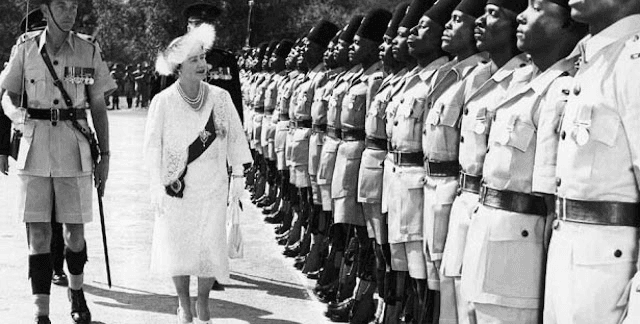
These institutions were concerned with the maintenance of law, order and the security of the colonial state to ensure that colonialists achieve their ultimate goals. The British established their military institutions in East Africa and central Africa. In East Africa it was referred to as East Africa Rifles it has the duty of protecting Uganda and Kenya.
In central Africa it was known as central Africa Rifles of Nyasaland (Malawi). The two military institution were joined in 1902 and formed the king’s African Rifles (KAR) the KAR had battalions in every British territory. KAR was established in Tabora Tanganyika in 1919. The KAR recruited soldiers from Somalia, Kenya, Uganda, Tanganyika and Malawi.
Another part of the colonial military institution was the police force. This recruited cadets in the colonies or externally. The police recruited from outside the colonies were from India, Europe and some were Nubians from Sudan.
The colonialist always recruited their force to foreign land which would make it easy for these workers to be fierce ruthless and harsh to the people of the foreign land.
On the other hand the French had their army which was very popular among the French West African colonies such as Senegal, Guinea and Mali. Germany never had a stable recognized army; they preferred hired mercenaries from other parts of the world and Africa.
The major reason for establishing the colonial military force was to defend the White colonial administrators in the colonies and safeguard colonial interests against internal and external threats.
In addition, the colonial army had a duty of suppressing and exploiting Africans with the help of other established colonial organs such as the police, the prison and the judiciary without forgetting the colonial administration, since colonialism was very much resented and resisted by the Africans.
The top and middle positions of the army were dominated by the European officials and the lowest levels consisted of Africans. The Africans were included in the colonial army in the period of world wars I and II. For instance the KAR had all white soldiers in its army during the word wars.
Africans were later recruited in this army in order to suppress the Germans in East Africa. Many of the East Africa KAR soldiers offered their services in Burma, Egypt, Ethiopia, Sri Lanka and Somalia.
The police force
The colonial police force was created in order to ensure that peace and order were maintained in their colonies. In addition it made sure that Africans paid taxes, produced raw materials such as cash crops production in the colonial plantations and performed public works such as building railways, and roads when required by the colonial government.
The other role of the police was to suppress the unacceptable African practices in the eyes of Europeans such as human sacrifice, slavery and the buying of the dead bodies. Police caught African people who committed crimes and brought them before the court of the law for European justice to take its course. In Tanganyika the first police force initiated in 1919, under the command of Dutch officers from South Africa
The prison
Prisons were created in the African colonies in order to discipline and guard African prisoners who were convicted and sentenced by the colonial judicial system. Many African prisoners during colonial rule were those who failed to pay taxes or refused to work in the colonial plantations and for public services.
The Functions of each Colonial Military and Colonial Legal Institutions
Major functions of the colonial military institutions
- To defend of colonial boundaries: The colonial administration ordered their army to fight against their enemies. For instance in 1919, 6 th KAR battalion of the British in Tanganyika fought in World War I in Kalito (Ethiopia) and another part of it fought in Burma and Sudan.
- Implemented land alienation for colonial settlers: To establish colonial plantation they enforced the land alienation policy throughout the colonies.
- Suppression of African resistance: Some Africans reacted very strongly to colonial ruler ship so it was the duty of colonial military to suppress the opposition. This was used as the only way for colonialists to maintain their administration.
- They had a task of maintaining peace and order through maintaining colonial laws and orders: They also prevented crimes in the colonies. Not only that but they also protected the colonial properties such as buildings, infrastructure etc.
- Tax collection and information: They were responsible for collecting information and supervising the tax collected in the colony. The information collected was to be communicated to the colonial masters.
- Supervision of public works was among the functions of the colonial military institutions: Public works included the construction of infrastructures such as railway, ports, prisons, hospitals, schools, churches etc. all these had to be supervised by the colonial military.
- Implement colonial conquest: To effect colonial invasion and domination in Africa during the colonial penetration and occupation the colonial military had to penetrate to the interior for the purpose of establishing the colonization process.
Characteristics of the colonial military
- Provided low wages: Exploited African soldiers through low payment of salaries although they performed the tough work in the army, while the Whites were paid highly.
- Poor working condition: African soldiers were subjected to poor social services. They lived in low standards and small houses with shared bathrooms and toilets while white soldiers and their officers lived in big well-ventilated, well-furnished houses; other social services such as health and education were also offered on discriminatory bases.
- Practiced racism: Africans was restricted from interacting with white soldiers apart from official meetings. For instance African entertained themselves in their social halls that were of low standards and had minimum facilities and White had their clubs where they interacted among themselves
- Poor education: Most colonial forces were more or less illiterate because it was believed that an uneducated force was better for the colonialists.
- Applied force not brains: Most colonial forces used strict command with less reasoning.
The colonial legal institutions were the colonial organizations that dealt with legal issues. It had the duty of advising colonial government, receiving people’s claims, educating the society and guiding on the procedures to be followed, and providing legal aid. It included the legislative councils of elders, the prisons and the courts.
They adapted the colonial administrative system such as the councils of elders which were common in British colonies.
The legal systems during the colonial period in many African colonies were led by European judges and magistrates. It sued and sentenced those who were not affecting the oppressive colonial laws.
The nature of punishment administered in the colonial judicial system ranged from fines, caning, imprisonment and execution. The colonial judiciary system was governed by the help of
- The Criminal Investigation Department: This department performed the task of investigating all criminal reports.
- The motorized companies: Those performed the task of suppressing strikes formed by trade unionists. The motorized companies were established in 1947.
- The militia: This took charge of collecting taxes and arrested Africans who failed to pay tax or evaded paying taxes.
Duties of the legal institutions
The major duties of the legal institutions were vast. Some of them were to amend laws, acts and ordinances as they were amended time after time in order to suit the colonial situation. Legal institutions had to do so to ensure that Africans performed various colonial activities.
Among the laws and ordinances made was the crown land ordinance of 1915 in Kenya. This offered white settlers the right to own Kenyan highlands for a 99 years lease. Another instance was that of masters and servants ordinance of 1924 which was established in Tanganyika.
The handling of various claims of the people was done through councils of elders and the legislative council (LEGCO) the councils of elders dealt with African cases while the LEGCO handled both European and African claims
………..
Africa without colonialism?
The Berlin Conference of 1884-1885 formalised what has become known as the ‘Scramble for Africa’. European powers arbitrarily divided up Africa among themselves and started administrating their new colonies. Seventy years later they bequeathed to native Africans countries that looked remarkably different from how they looked in 1880. And, albeit with some exceptions, these countries are among the poorest in the world today.
Would Africa’s economic development have been different without colonialism? Would it have been richer today? Debate has raged on this question for 50 years but for the first time exciting research by economic historians in colonial archives is putting the debate on a sound empirical footing. Some of the findings are puzzling for critics of colonialism. There is evidence of improved economic development outcomes within the colonial period, for instance real wages increased under the formal sector in British West Africa (Frankema and Van Waaijenburg 2005). Moreover, the stature of military recruits in Ghana and British East Africa suggests that height increased during the colonial period (Moradi 2009, Austin, Baten and Moradi 2011), a sign of increasing prosperity. Was colonial rule as predatory as many claim? Should we take this as evidence that colonialism was good for development? Our recent research (Heldring and Robinson 2012) evaluates this question and argues that the answer is probably no.
A few observations are in order:
- Most African countries saw steadily rising incomes over the colonial period relative to the base year 1885.
Africans were able to reap the benefits of the introduction of railways and mining technology. Furthermore, being colonised meant deeper integration into world trade. Yet, how much of this is due to colonialism and how much of it would have happened anyway, in the wake of trade expansion is unclear.
- The fact that we see living standards increase on average does not imply that everybody’s living standards increased.
For instance, in southern Africa the immiserising impact of land expropriation and the creation of ‘dual economies’ (Palmer and Parsons 1977) on incomes suggests that Africans experienced a severe deterioration in living standards as the consequence of colonialism. So we might observe formal sector wages going up while the vast majority of the population, cut off from the formal sector, sees its purchasing power deteriorate.
- Evaluating the impact of colonialism involves not just looking at the raw numbers but considering the counterfactual. We have to think about what the trajectories of African societies would have been in the absence of colonialism.
For example, would the type of immiserisation of Africans in South Africa have happened if the Zulu state had taken over the Rand and developed the gold mining industry? If the Europeans brought technology or institutions, absent colonialism Africans could have adopted or innovated these themselves. In addition, any of this data has to be seen in the context of existing trends and international comparisons. It seems plausible that even without colonisation missionaries would have expanded education and the WHO would have brought medical technology, for instance1.
- To understand the impact of colonialism on development one has to think carefully about what happened after colonialism as well.
To judge the impact of colonialism on development in Africa simply by looking at outcomes during the colonial period is a conceptual mistake. Post-independence Africa looked nothing like it would have done in the absence of colonialism. Indeed, in most cases post-independence economic decline in Africa can be explicitly attributed to colonialism because the types of mechanisms that led to this decline were creations of colonial society.
Three types of colonies
To facilitate the use of counterfactuals we distinguish between three types of colony:
- Those with a centralised state at the time of Scramble for Africa, such as Benin, Botswana, Burundi, Ethiopia, Ghana, Lesotho, Rwanda, and Swaziland;
- Those of white settlement, such as Kenya, Namibia, South Africa, Zimbabwe, and probably Angola and Mozambique as well;
- Everyone else – colonies which did not experience significant white settlement and where there was either no significant pre-colonial state formation (like Somalia or South Sudan) or where there was a mixture of centralised and uncentralised societies (such as Congo-Brazzaville, Nigeria, Uganda and Sierra Leone).
It seems reasonable to assume that all groups, absent colonialism, would have had the same contacts with the rest of the world. This implies missionaries would have gone to convert people and built schools, the League of Nations would have tried to abolish coerced labour, and the WHO would have tried to disseminate medical technology. Moreover, it implies that African countries would have continued to export, as many had prior to 1885.
In terms of political institutions, in the first set of countries the type of state formation and development that had taken place in the 19th century would have continued. The evidence clearly suggests that states such as the Tswana states in Botswana, the Asante state in Ghana, or the Rwanda state were becoming more centralised and consolidated. This does not imply that economic institutions were necessarily becoming better. Nevertheless, political centralisation is a prerequisite for order and public good provision2 and though states also collapse, once started there are strong forces leading political centralisation to intensify. In the second and third sets we similarly assume that political institutions would have continued on the path they had in the 19th century.
Colonialism retarded development
Taking into account these trends as well as recognising the need for a counterfactual we argue that in two sorts of colonies there is a clear case to be made for colonialism retarding development; those with a centralised state at the time of Scramble for Africa and those of white settlement.
In the former, just the assumption that the previous patterns of political development would continue is sufficient to argue that these countries would be more developed today. Colonialism not only blocked further political development, but indirect rule made local elites less accountable to their citizens. After independence, even if these states had a coherence others lacked, they had far more predatory rulers. These polities also suffered from the uniform colonial legacies of racism, stereotypes and misconceptions that Africans may not have had and which have since caused immense problems, most notably in Burundi and Rwanda.
In colonies of white settlement the most important factor was that the highly extractive nature of colonial rule and land grabs manifested themselves, as we noted, in quite serious immiserisation of Africans during the colonial period. The evolution of the international dissemination and diffusion of technology plus the relative absence of slavery in this part of Africa makes it likely that, absent colonialism, African living standards would have slowly improved. This, plus the large increases in inequality and the racial and ethnic conflicts bequeathed to these colonies after the end of colonialism, make it plausible that development outcomes in places such as Zimbabwe would be better today and over the last century had it not been colonised.
The third set of cases are more complex because it does not seem plausible that the pre-colonial institutions of Somalia, for example, were conducive to development or were undergoing a process of state formation. Yet even in many of these more ambiguous cases it seems hard to make a strong case in favor of colonialism actually fostering development. It could be, to consider Uganda, that the British brought stability by stopping long-running conflicts between the pre-colonial states of Buganda, Bunyoro, Ankole and Tooro. Yet the evidence suggests that even these societies were very ready to adopt better technology when it appeared3 and any gains that there might have been in terms of stability were reversed when the British left in 1962, bequeathing to the Ugandans a polity with no workable social contract resulting in 50 years of political instability, military dictatorships and civil war.
Conclusion
All in all, it is difficult to bring the available evidence together with plausible counterfactuals to argue that there is any country today in Sub-Saharan Africa that is more developed because it was colonised by Europeans. Quite the contrary.