HISTORY NOTES FOR FORM SIX We have:Notes A and Notes B
Notes A
Click the links below to view the notes:
TOPIC 1 – THE RISE OF CAPITALISM IN EUROPE
TOPIC 2 – THE RISE OF DEMOCRACY IN EUROPE
TOPIC 3 – IMPERIALISM AND TERRITORIAL DIVISION OF THE WORLD (COLONIZATION OF AFRICA)
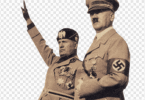
TOPIC 4 – THE RISE OF DICTATORSHIP IN GERMANY, ITALY AND JAPAN
TOPIC 5 – THE RISE OF SOCIALISM
TOPIC 6 – THE EMERGENCE OF U.S.A AS A NEW CAPITALIST SUPER POWER
TOPIC 7 – THREATS TO WORLD PEACE AFTER WWII
TOPIC 8 – NEO-COLONIALISM AND UNDERDEVELOPMENT IN THE THIRD WORLD
Notes BClick the links below to view the notes:
1. RISE OF CAPITALISM IN EUROPE
2. COMPETITIVE CAPITALISM AND INDUSTRIAL REVOLUTIONS IN EUROPE
3. IMPERIALISM AND THE TERRITORIAL DIVISION OF THE WORLD
4. RISE OF DEMOCRACY IN EUROPE
5. THE RISE OF DICTATORSHIP IN GERMANY, ITALY AND JAPAN
7. THE EMERGENCE OF THE USA AS A NEW CAPITALIST SUPERPOWER
8. THREATS TO THE WORLD PEACE AFTER THE SECOND WORLD WAR
9. NEO-COLONIALISM AND UNDERDEVELOPMENT OF THIRD WORLD COUNTRIES
WHY USA IS THE MOST
POWERFUL COUNTRY IN THE WORLD?
1. The Most Powerful Military
The first reason why America is the
most powerful country in the world is the US military.
America has one of the largest armed
forces in the world. Although the US military doesn’t have the biggest army in
terms of personnel, it is the strongest with the biggest defense budget in the
world.
2. American Innovation and
Technology
The United States is one of the most
technologically advanced countries in the world. This is a key reason why it is
so powerful.
In the modern world, technology is
strength. Countries that can produce high-tech goods, develop new advanced
machinery and computers, and utilise information and technology effectively,
are ensured influential positions in the global order.
Many countries around the world rely on
American technology and this is an important reason why it is the
most powerful county in the world.
Americas’ ability to innovate not only
ensures the country has a world leader economy, but also means their armed
forces has access to the latest advanced weaponry.
3. The World’s Largest Economy
The size of the US economy is another
reason why America is so powerful.
America has the world’s largest
economy, by far. It makes up nearly a quarter of the entire world economy.
Because of the size of the US economy, it dominates global trade, finance, and
international business. Being the largest economy in the world gives America
immense power.
4. The US Has a Large Population
A third reason why America is a
powerful country is the size of the US population.
America is the third most
populous country in the world. It has 331 million people. Having a large
population helps a country enormously. It allows it to create a bigger economy,
have a larger army and have a more productive workforce.
The large size of the US population
ensures that America’s economy remains dynamic and innovative and this directly
relates to America’s international power.
Not every country with a big population
becomes a superpower. However, America has effectively harnessed its
large population to become an incredibly strong country.
5. Most Valuable Companies
America has some of the world’s largest
and most important businesses, which is one of the primary reasons for its
power.
America has some of the biggest and
most valuable companies by market cap in the world. Apple, Microsoft, Google,
Amazon, and Coca-Cola are just a few of the world’s leading companies.
Businesses such as these have enormous worldwide markets.
Having internationally important
companies that do business around the world is a major factor in America’s
global strength.
American businesses dominate many parts
of the world. They are highly recognisable and are often famous established
brands. This makes the US a powerful country because it means people around the
world build a connection with American lifestyles and values.
American companies also outperform local brands in many countries,
further adding to the American global influence.
FEATURES OF
CAPITALISM
1. Two-Class System
Historically, capitalist society was
characterized by the split between two classes of individuals: the capitalist
class, which owns the means for producing and distributing goods (the owners),
and the working class, who sell their labour to the capitalist class in
exchange for wages (the workers).
The economy is run by individual
corporations that own and operate companies and make decisions as to the use of
resources. But there exists a “division of labour” that allows
for specialization, typically occurring through education and training, further
breaking down the two-class system into subclasses (e.g., the middle class).1
2. Private property
This is one of the most important
characteristics of capitalism where private properties like factories,
machines, and equipment can be owned by private individuals or companies.
3. Freedom of enterprise
Under this system, every individual has
the right to make their own economic decisions without any interference. This
is applicable to both consumers and producers.
4. Limited Government
Role
In a capitalist economy, the government
has little involvement in the functioning of private firms. They intervene only
to prevent a monopoly. All the government has to do is ensure fair competition
among business entities. However, this economic system gives the wealthy an
unfair advantage. An economic inequality, therefore, is the biggest
criticism against capitalist economies.
5. Profit motive
The motive of earning profit is one of
the most important drivers of a capitalist economy. In this system, all the
companies are looking to produce and sell their products to consumers to earn
maximum profit.
6. Markets and
Competition
Competition is the other vital
attribute of a capitalist system. Private businesses compete to provide
consumers with goods and services that are better, faster, and cheaper. The
principle of competition forces businesses to maximize efficiency and
offer their products at the lowest prices the market will bear, lest they get
put out of business by more efficient and better-priced competitors.
..
THE RISE OF DEMOCRACY IN EUROPE
Democracy is a system of government in which power is vested in the people and exercised by them directly or through freely elected representatives.
Or, democracy is a system where people can change their rulers in a peaceful manner and the government is given the right to rule because the people say it may.
Modern democracies are characterized by two capabilities that differentiate them fundamentally from earlier forms of government: the capacity to intervene in their own societies and the recognition of their sovereignty by an international legalistic framework of similarly sovereign states. Democratic government is commonly juxtaposed with oligarchic and monarchic systems, which are ruled by a minority and a sole monarch respectively.
Democracy is generally associated with the efforts of the ancient Greeks who were themselves considered the founders of Western civilization by the 18th century intellectuals who attempted to leverage these early democratic experiments into a new template for post-monarchical political organization. The extent to which these 18th century democratic revivalists succeeded in turning the democratic ideals of the ancient Greeks into the dominant political institution of the next 300 years is hardly debatable, even if the moral justifications they often employed might be. Nevertheless, the critical historical juncture catalyzed by the resurrection of democratic ideals and institutions fundamentally transformed the ensuing centuries and has dominated the international landscape since the dismantling of the final vestige of empire following the end of the Second World War.
Modern representative democracies attempt to bridge the gulf between the Hobbesian ‘state of nature’ and the grip of authoritarianism through ‘social contracts’ that enshrine the rights of the citizens, curtail the power of the state, and grant agency through the right to vote. While they engage populations with some level of decision-making, they are defined by the premise of distrust in the ability of human populations to make a direct judgement about candidates or decisions on issues.
Historically, the rise of democracy in Europe is connected with the development of capitalism which started in Great Britain as early as from 15th century, indeed, it has been argued that modern democratic ideas grew initially in order to facilitate the growth of capitalism.
Forms of Democracy
There are generally two forms of democracy namely direct democracy and representative democracy.
- Direct democracy. This was the first form of democracy that originated from ancient Greek states like Athens and Sparta by which all citizens congregated to form an The whole society collected together and people elected leaders and made laws. This system is best in small areas with small populations. For example the Greek city states comprised of only about 10,000 free citizens who were allowed to participate for democracy.
- Representative democracy. This is a form of democracy in which people choose a few to represent them in the assembly. The elected representatives form an assembly (parliament) which passes laws and decisions for them. The representatives are to represent the ideas of their people. However, in most cases the will of their people’ does not sound or be represented since in the assembly decisions are passed by the consent of the members of the This form of democracy is practiced in vast areas covered with large populations.
Origins of democracy
Through the centuries, political philosophers, starting in ancient Greece with Aristotle and later others like the English philosopher John Locke and the French philosopher Jean Jacques Rousseau have developed the democratic theory.
Ancient Greece
Democracy began to develop in ancient Greece as early as 500 BC, Greek Political thinkers stressed the idea of democracy, through which the idea of rule by law was emphasized (by giving people power to be involved in their societies’ affairs). However Athens (Greek) brand of democracy was different from today’s democracy. It was direct democracy where the whole body of the citizens could come together and vote on the propositions put before them by their contending leaders; it was basically a simple majority rule whereby the whole society was gathered. This system suited them because the Greek city-states were small societies with, total free population numbered about no more than 10,000 people.
That brand was different from today’s representative one (democracy) where the citizens elect representatives, who make the decisions on their behalf. This type puts a lot of power in the hands of the representatives other than the people as laws and decisions are passed by the representatives and not the majority. Representative democracy is second-best to direct democracy because the representatives’ decisions, in most cases are not exactly the will of the people. However representative democracy is unavoidable today especially at the national levels due to expanded population and vastness of societies; countries or nation-states.
In other words democracy began in ancient times, during the 5th Century BC in which most of the city-states of Greece had direct democracy. Each city-state had its assembly, in which all citizens had the right to speak and vote.
The Ancient Romans experimented with democracy but they never practiced it as fully as did the Greeks. Roman political thinkers taught that political power comes from the consent of the people. The Romans statesman Cicero contributed to the idea of a Universal law of reason that is binding on all people and governments everywhere. He suggested that people have natural rights which every state must respect.
PRINCIPLES WHICH GOVERNED POLITICS IN EUROPE BEFORE THE RISE OF DEMOCRACY
- Absolutism of the monarchs. Monarchs held autocratic powers with all state authority rested in their hands. They were the chief law makers. The kings’ words and wishes were In a few words the monarch was the law and the state itself. It applied as if the state was a personal institution of the monarch.
- The theory of divine rights of monarchs. By this theory, European Monarchs assumed Godly given powers by asserting that they arc a subject to no earthly authority. They exalted themselves to the highest position of man claiming that they were appointed by God to rule and it was only God who could question their actions and were answerable to only God. It meant that monarchs were all the time right and no one had the right to question their
- The church. It enjoyed political powers, besides religious control. The clergy worked with the monarchs, enjoyed both state and religious powers and privileges, for example holding ministerial posts and were paid salaries by the State religions like. Catholicism for France and Austria and Anglicanism for Britain existed in which all the citizens were by law obliged to belong. Respect to the state meant respect to the Church and the vice versa. The church owned estates and serfs/tenants to work on its land. It collected feudal dues such as rent, taxes, fines and free labour.
- Kingship making. Monarchs’ position was hereditary. Rulers ascended to the position by birth rights thus he/she succeeded the father or a close relative like a brother, sister or a That meant that the position of a ruler was not subjected to be elected or appointed by the public consent but by royal family. In most cases monarchs named their successors.
- The feudal system. Under feudalism, European societies were stratified into antagonistic classes; the upper class consisting of the Nobility, the clergy and landlords enjoyed the privileged position of the state, they held political powers and owned property especially land and also were exempted from taxation; the middle class of the bourgeoisie consisting of merchants, industrialists and professionals. These, despite their wealth and education, were not included in the governance of the state. At the bottom was the poor peasant class subjected to all sorts of exploitation. They bore the whole weight of the tax, high feudal dues, liable to forced labour.
- A weak parliamentary system. Parliamentary system had existed for many centuries but Parliaments were mainly consultation/advisory bodies and meetings of the monarchs with the nobles and the aristocrats and not a lawmaking institution. It was called by the king and not elected by the masses and served the interests of the monarch and nobility.
- Weak constitutional monarchical system. With increasing demand for reforms, monarchs were pressed to allow some political freedoms which gave way to parliamentary politics and constitutionalism. However at the beginning though constitutions were put in place, Monarchs retained dictatorial powers with constitutions not limiting their powers for example they continued appointing officials and controlling the economic affairs of their
RISE OF OPPOSITION TO ABSOLUTISM
Rise of opposition from philosophers/intellectuals/encyclopes towards the principle of divine rule/absolutism.
Philosophers were a source of enlightenment to European societies. They based on scientific principles in contradicting absolute monarchy and divine rights, aristocracy by birth and state churches. They were against such due to their lack of human concern.
They argued that maintaining order by forcing people into conformity destroyed the innate human potential for moral judgment. The state churches often used by monarchs to support corrupt regimes also undermined respect for traditional Christianity. Major political and democratic philosophers;
John Locke (1632-1704). Locke was an English philosopher and among the most influential political philosophers. In his writings, the two” Treatises of Government” Locke raised the claim that men are by nature free and equal. He argued that people have rights, such as the right to life, liberty, and property. He explained that the duty of government is to ensure stability, comfortable enjoyment of peoples’ lives, liberty, and property. He stressed that governments should exist by the consent of the people in order to protect the rights of the people and promote the public good and that governments that fail to do so can be resisted and replaced with new governments. Locke also defends the principle of majority rule and e separation of legislative and executive powers. He called for religious freedom and also denied that churches should have any coercive power over their members.
Baron Charles Montesquicu (1689-1755). He criticized monarchical absolutism and the church offending authorities. In his book “The Spirit of the Laws” advocated for a constitutional monarchy as the best system of government for a people who prized freedom and called for the need of sharing of sovereignty between different centres of power; the Crown, Parliament and the law courts to provide a permanent check on any one of them becoming despotic. By building such ideas, Montesquieu stressed on the end of (monarchs’) absolute powers. He was a catholic who believed that people should think for themselves and called for the separation of church and state and for more religious freedom.
Francois-Marie Arouet Voltaire (1694-1778). Voltaire’s main contribution to the enlightenment was freedom of speech, press and religion and opposition to monarch, militarism and slavery. The two things Voltaire felt the most strongly against were religious intolerance and absolutist government. He was a crusader against tyranny; he urged people take up arms against tyranny, called for liberal freedoms and stressed that a republic is superior to the monarchy. Like john Locke, Voltaire regarded the franchise as the ultimate security for personal liberty and the ballot box as another check on arbitrary government. Voltaire defended freedom of speech and religious tolerance and said that the ideal religion would teach more morality than dogma. State churches were special targets for his attacks. Voltaire’s arguments as well as of other philosophers depicted churches as part of a vast conspiracy aimed at perpetuating injustices and tyranny that is unfair or cruel use of power.
Jean Jacques Rousseau (1712-1778). In his work “The Social Contract” Rousseau claimed that “All men are born equal” and there is no need for others to claim more right than the rest and outlines that the basis for a legitimate political order within the framework of republicanism. He further argues that sovereignty (or the power to make laws) should be in the hands of the people, he also makes a sharp distinction between the sovereign and the government. The government is composed of magistrates, charged with implementing and enforcing the general will. The “sovereign” is the rule of law, ideally decided on by direct democracy in an assembly. He also held the idea that the government that derived rights from the people and so could be replaced by the people. Unlike many of the more radical Enlightenment philosophers, Rousseau affirmed the necessity of religion but also called religious toleration.
Generally the ‘Enlightenment thinkers did a lot to enlighten their masses on the authoritarianism of divine rule. By their addresses and writings they educated and instill democratic principles on their societies. For example they argued against the rigid grading of society into classes and stressed that equal rights and responsibilities should replace privileges and men should be developed through education and opportunity and not by birth rights. These ideas inspired the unprivileged lower classes to develop revolutionary spirit against absolute monarchs. Rise of opposition from industrialists and financiers towards the principle of divine rule
The Industrialists and Financiers belonged to the middle class of the bourgeoisie with other business classes like merchants and the professional classes like teachers, lawyers, and doctors
- The middle class was against their exclusion from the governance of the state. Despite their wealth and education status they were not directly involved in the political affairs of their states. Leadership in high state offices was occupied by the nobility whose positions were Therefore, this class struggled for equal rights with the aristocrats.
- They were against absolute rule and the feudal system. Absolutism was against personal To them that limited peoples freedom of choice and creativeness. While the feudal system was detrimental to business progress as it tied serfs on the land and denied the bourgeoisie free cheap labour. Also it curtailed development of trade and industry.
- The middle class was also against the unfair taxation system. While the middle class and the lower poor classes of peasants and serfs were over burdened by carrying the whole tax weight of the state, the upper wealthy classes of the aristocrats and clergy were exempted from Unfair taxation was a detriment against development of trade and industry.
- The class was also against the slow parliamentary development. Besides their exclusion from it, the parliament served merely as a meeting point of nobles and consultation body to the monarchs it was not a law making body. It was called by the monarchs and he could dismiss it if it failed to serve his interest.
- They were fed up with the actions of the nobility class who humiliated them. Financiers were overburdened with taxes set by the absolutists against them. This annoyed them so much to the extent of rising to oppose the Monarch’s
- Financiers also rose to opposition due to other causes like the extravagance of the monarchs who used the taxes collected from them and the poor lower classes not to develop the state but to enrich themselves.
- They middle class, particularly the Financiers were also against the system of the government borrowing money from them and not paying back. Their governments could borrow money from them but could either reduce interests on the loans or repudiate
- The class frequently presented their grievances to their state authorities like parliaments inform of petitions and letters. For example, a Scottish middle class wrote the “Lex Rex” meaning “The Law is King” an argument against the divine right of Kings and for the right of the people to replace the
MAJOR POLITICAL REVOLUTIONS IN EUROPE
A political revolution is a fundamental change or transformation whereby a certain system of governance is overthrown and replaced by a new system by those who were previously subjected to the old system. A political revolution is a struggle for state power, in most cases by class struggle where the subjected unprivileged classes overthrows the existing ruling class to establish a new government in their favour. A revolution might be peaceful or violent, however in most cases violent.
Socio- political and economic life in Europe before the revolutions
Socio-Political;
Europe was under centralized monarchies whose Monarchs assumed autocratic and divine powers not to rule by constitution. Though parliaments existed in many states, they were not elected hut appointed by the rulers and not as law making bodies but merely served as advisory bodies to the monarchs.
Europe was a feudal Society. The Society was strongly stratified into classes i.e. the upper class, middle class and low class. State and economic powers were in the hands of the highly privileged feudal classes of the nobility and landlords. The lower class of serfs, peasants and tenants were landless and subjected to untold exploitation.
The church was not only a religious institution hut also a political and feudal institution. It owned land and rented it to the serfs, peasants and tenants to work for them. The state and (state) church were inseparable.
Europe had no religious tolerance. There were state religions whereby all citizens were by law obliged to belong. For example in England, the Anglican religion, everyone had to belong to that religion. Also in France, Spain, Portugal where there was Catholicism.
Economic life of Europe before the revolution
Wealth was owned and controlled by a minority section of people, the aristocrats/ruling families and all the feudal classes. The majority were propertyless with no political powers or wealth. They lived on the mercy of the wealthy classes. There was unfair taxation with the lower peasantry class being highly taxed.
The bourgeoisie class was expanding. The classes of merchants, industrialists, financiers and professional classes like teachers, lawyers and doctors. The bourgeoisie class was gaining much influence on their societies due to their wealth and education status which put them in good position to criticize the evil practices of their rulers.
THE ENGLISH REVOLUTION, 1640-1689
The English Revolution was the first bourgeoisie revolution to occur in Europe and the first notable political revolution in the world. The English Revolutions were staged by the English Bourgeoisie and the lower classes driven by the desire to strengthen constitutional governance in England. They came at the climax of the English peoples’ discontent of autocratic rule of English monarchs. The aim of the revolutions in that sense was to establish a democratic system of governance by ending the absolute monarchical rule.
The English political revolution had two phases, overthrowing two different monarchs. The first revolution took place in 1648 led by Oliver Cromwell. In this revolution King Charles I was overthrown and publically executed in 1649 and thereafter the bourgeoisie republican (the common wealth) state was established under Oliver Cromwell. Cromwell took over for some years and was referred to as a “Missioned ruler” because he did not come from a ruling family. The revolution was the apex of the English Civil war (1642- 49) sparked off with conflicts between King Charles and the parliament supported by the Puritans and the conflict between the king and the Scotts over religious issues. The central role of the “Puritans” in struggle, made the revolution and the civil war appear in the form of religious conflict. That gives the revolution the name of the “Puritan Revolution”.
Cromwell died in 1657 and was succeeded by his son Richard who however resigned in 1659. Richard’s resignation gave way to the restoration of the monarchy when Charles II was proclaimed king. Charles II tried to please the majority English people by ruling through a constitution and a parliamentary government and by allowing religious freedoms.
In 1685 king Charles II died and the duke of York became James II. With the succession of King James II, however England again experienced a despotic rule because like King Charles I and other English monarchs of the past, James II was a firm believer in the divine rights of kings. He disrespected the constitution and parliamentary governance. In their reaction the English people abandoned King James II and peacefully he abdicated without bloodshed in 1688 and that’s why the second revolution is referred to as the Glorious revolution. After the abdication of King James II, William and Mary were proclaimed king and queen of England.
Aims of the English revolution
- To establish the rule of Intention was focused on ending absolute rule of English monarchs.
Introduce religious freedoms and tolerance. To allow people worship in religious beliefs of their own choice other than being tied on state religions.
- Introduce fair taxation-taxation based on income/property basis and not merely on class status by which the rich nobility class were exempted while the poor peasant carried the tax burden.
- Establish strong parliamentary system to allow fair This would also consolidate the rule of law.
Causes of the English political (the first/ puritan) revolution
- The theory of the Divine rule. The theory was adopted by English Monarchs like King James I, Charles I and King James II. To stress the doctrine of divine rights of kings king James I described kings as “little gods on earth” chosen by God to rule. Thus English monarchs asserted Godly given powers by assuming to be representative of God and answerable to only God. It meant that monarchs possessed absolute and unlimited powers leading to the people’s oppression, which instigated the
- The oppressive, exploitative and conservative nature f the English feudal system. The system divided the English society into antagonistic classes; the privileged upper classes of aristocrats, clergy and landlords who enjoyed state power and wealth and the lower unprivileged classes of the poor peasants and serfs whose ‘birth right rewards’ were exploitation and oppression in form of high feudal dues such as rent, taxes and forced Additionally, the conservativeness of the feudal system hindered the bourgeoisie development since the English feudal aristocrats were rigid and feared changes.
- The stratification of the English The English society was divided into antagonistic classes; the upper class of aristocrats, clergy, and landlords enjoyed the privileges of the state while as the majority lower classes of serfs and peasants sufiered from exploitation. For instance, they held state power, owned land and were exempted from taxation. Additionally, they exploited the lower unprivileged classes of the bourgeoisie and the peasants through heavy taxation and high feudal rents and denied them chance to participate in politics. Basing on such conditions, the lower classes rose to demand for equal rights hence the revolution.
- The dismissal of parliament by King Charles I. Charles suspended the parliament for 11 years, from 1629 to 1640 because it refused to grant him money for his luxurious expenditures and instead he governed England as an absolute king. In 1640, he called the parliament again, but because it refused to grant him money to wage war against Scotland, he again dismissed it and planned to arrest members of the This time the English people could not forgive because they loved and much respected their parliament.
- The extravagance of the English Monarchs. The English Monarchs like Charles I and James II, were extremely extravagant, they used a lot of state funds for their luxurious expenditures like parties, building lavish palaces and hiring many maids other than in developmental programs which could benefit their people. Making matters worse, the finances they used lavishly were from the taxes collected from the people. So by 1640’s the English people couldn’t stomach it anymore hence the revolution.
- Expansion of the English bourgeoisie class. This was the commercial class of merchants. financiers, and professions like Doctors, teachers, lawyers and economists. This class was discounted by the aristocratic system which limited their freedom to participate in state Using their wealth and education, the bourgeoisie influenced the peasants,
organized them into a revolutionary force and used them to fight for state power in a way to create a government in their favour. They provided leadership and funds for the success of the revolutions.
- The role of philosophers like John Locke (role of literature). Philosophers and writers