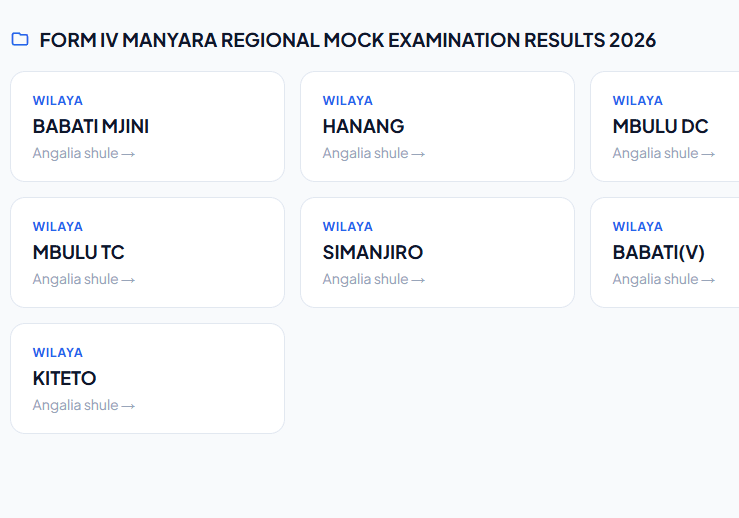
Matokeo ya Mock – MARA – Form Four 2026 – Shule Zote

Mock Results for Mara- Form Four 2026
CLICK HERE to view the results
..
..
Develop links to the community. Everyone must be committed to improving schools. Schools that have close ties to families, support services, community police, the faith-based community and the community at large can benefit from many valuable resources. When these links are weak, the risk of school violence is heightened and the opportunity to serve children who are at risk for violence or who may be affected by it is decreased.
The SCRE review argues that there are detrimental effects on brain development of deprived environments (where normal stimuli are limited) but that there is no case made by neuroscience for attempting to provide “enriched environments” for very young children in order to increase the number of synaptic connections made in the brain. There is no evidence linking synaptic densities in early life with improved learning later. However, it is notable that an earlier review of brain research and learning by Frank McNeil for the London Institute of Education School Improvement Network (McNeil 1999) argued for the positive effects of some “enrichment” programmes. This paper also highlights the relationship of emotions to successful learning, including the need for stress-free learning conditions and the contributions made to brain activity by interactions with music and other arts and by exercise and appropriate nutrition, as well as by use of language and numbers.
Emphasize positive relationships among students and staff. Research shows that a positive relationship with an adult who is available to provide support when needed is one of the most critical factors in preventing student violence. Students often look to adults in the school community for guidance, support and direction. Some children need help overcoming feelings of isolation and support in developing connections to others. Effective schools make sure that opportunities exist for adults to spend quality, personal time with children. Effective schools also foster positive student interpersonal relations – they encourage students to help each other and to feel comfortable assisting others in getting help when needed.