



Click the Subjects below to view the Notes:
..
Importance
of Health Services in Schools
School
health services are defined as “The procedures used by physicians, dentists,
nurses, teachers , etc, that are designed to appraise, protect, and promote
optimum health of students and school personnel through planned programmes. The
overall objective of the school
health programme is to ensure
that every child is as healthy as possible so that he can obtain the full
benefit from his education.
School
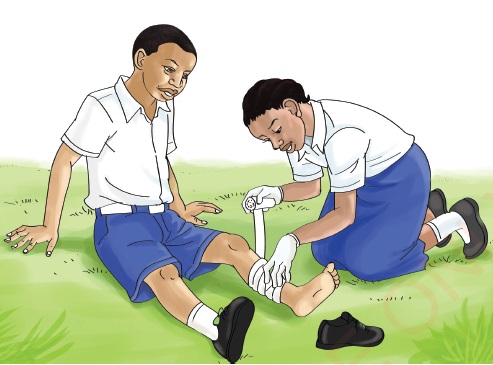
health services staff can help all students with preventive care such as flu
shots and vision and hearing screening, as well as acute and emergency care.
Qualified professionals such as school nurses, nurse practitioners, dentists,
health educators, physicians, physician assistants, and allied health personnel
provide these services.
For
students with chronic health
conditions, school nurses and other health care providers play a large role
in the daily management of their conditions. School health services staff also
are responsible for coordinating care by communicating with the student’s
family and health care providers so that they can stay healthy and ready to
learn.
Importance
of health services in schools:
1. Increase
school attendance.
2. Help
eligible students enroll in health insurance.
3. Connect
students’ family members with health coverage.
4. Provide
reimbursable health services
in schools.
5. Offer services
that support at-risk
students.
6. Promote
healthy school practices through nutrition, physical activity, and health education.
7. Improve
wellness policies and health
programs.
8. Build
local partnerships to support expanded health services.
9. Reduce emergency room visits.
10. Create
a positive school climate that fosters
learning.
The Need for School Health Services
Since
schools bring large numbers of students and staff together, prudence dictates
that as in any workplace a system must be in place to deal with such issues as
first aid, medical emergencies, and detection of contagious conditions that
could spread a group situation. Unlike other workplaces, however, a system must
also be established in schools to provide routine administration of
medications, since students especially young students may not be able to assume
this responsibility themselves, and concern for substance abuse has led to
policies in most schools that prohibit older students from administrating their
own medication.
Laws
pertaining to special education students require that schools provide the
services necessary for these students to receive an appropriate education. Such
services might include monitoring vital signs, changing dressings,
catheterization, tube feeding, or administering oxygen. The school must also
provide services to non-special education students with chronic health problems
such as asthma, diabetes, and seizures in order that they can be educated.
Schools have little or no choice in providing such services, for they are
dictated either by legislative mandate or by precautions pertaining to risks
and liability.
Services
such as screenings and immunizations are also widely accepted as belonging in
the schools, with the motivation having to do more with access, efficiency, and
economies of scale than with liability. Since schools are where children spend
a significant portion of their time, schools are seen by many observers as the
logical site for services that are based on public health principles of
population-based prevention. There is some debate, however, about the relative
benefits and disadvantages of a population-based versus a selective high-risk
approach, which targets preventive services only toward children at high risk.
What is Health Education?
Health
education is the set of philosophies and methodologies that educate the general
public, healthcare practitioners, and communities about anything related to
health. It draws from disciplines that include biology, environmental science,
ecology, psychology, physical science, and medical science. It is used to
promote good health as well as prevent disease, disability, and early death.
Health
education provides general knowledge for health promotion and disease
prevention. In addition, it inspires adolescents to acquire healthy beliefs and
knowledge and adopt healthy lifestyle choices. Health education includes health
services, physical education, psychological services, nutrition and food programs, health promotion and a
healthy environment, disease prevention, etc.
Parents
are always more concerned about their children’s academic education, including
– reading, writing, and learning. A comprehensive health education program
plays a crucial role in a child’s education, from kindergarten to high school.
Health education teaches children physical, mental, social, and psychological
health (overall well-being). It helps students to make healthy choices and avoid
risky behaviors. Health education training mainly focuses on preserving health,
avoiding illnesses, and training students to make healthier decisions in their
lives.