Matokeo ya Mock – KAGERA – Form Four 2026 – Shule Zote
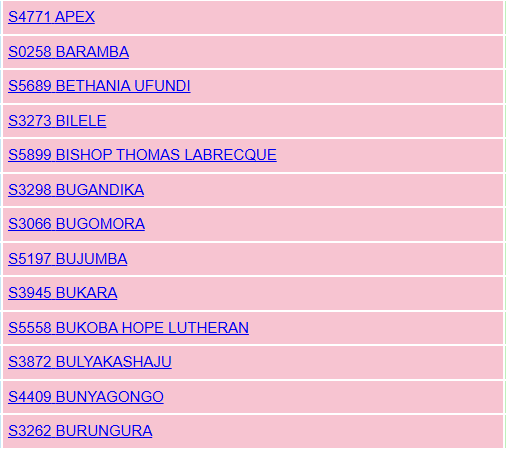
Mock Results for Kagera – Form Four 2026
CLICK HERE to view the results
..
..
Focus on academic achievement. Effective schools convey the attitude that all children can achieve academically and behave appropriately, while at the same time appreciating individual differences. Adequate resources and programs help ensure that expectations are met. Expectations are communicated clearly, with the understanding that meeting such expectations is a responsibility of the student, the school and the home. Students who do not receive the support they need are less likely to behave in socially desirable ways.
However, other forms of learning, which are “experience dependent”, rather than “experience expectant”, and which include culturally transmitted knowledge systems, occur only when the need arises for them. They do not seem to be related to particular periods when the brain is especially ready to create many synapses. Indeed, counterintuitively, as humans develop, there is a pruning of synaptic connections between neurons and a development of insulation of axons which makes the delivery of their electrical charges more efficient. The implication seems to be that much educational learning occurs not when the brain is physically growing at its fastest rate but when it is using existing neuron connections more efficiently than in early childhood.
Involve families in meaningful ways. Students whose families are involved in their growth in and outside of school are more likely to experience school success and less likely to become involved in antisocial activities. School communities must make parents feel welcome in school, address barriers to their participation and keep families positively engaged in their children’s education. Effective schools also support families in expressing concerns about their children – and they support families in getting the help they need to address behaviors that cause concern.