
1. DHANA YA HISTORIA YA TANZANIA NA MAADILI
2. CHIMBUKO LA JAMII ZA KITANZANIA NA MAADILI YAKE
3. MAADILI NA URITHI WA JAMII ZA KITANZANIA
4. FURSA ZITOKANAZO NA URITHI WA JAMII ZA KITANZANIA
5. MIFUMO KATIKA JAMII ZA KITANZANIA KABLA YA UKOLONI
6. UHUSIANO KATI YA JAMII ZA KITANZANIA NA JAMII ZINGINE
7. SAYANSI NA TEKNOLOJIA KABLA YA UKOLONI
LEARNING
HISTORY IN SCHOOLS
History
is one of the most important academic pursuits of any child’s education. Here,
we outline the importance of learning history and reveal study tips for pupils.
We
all live in the present and we plan for the future – but how do we understand
where we’re going and what progress looks like? To know exactly where you’re
going, you first need to understand where you have come from. For that you need
an appreciation of history.
History
is one of the most respected and most valuable academic subjects your child
will learn, and one they will study throughout their learning career. History
is a cornerstone subject that we teach across all of our curricula, including
the British Curriculum, IB Curriculum, and IGCSE Curriculum.
This
guide takes a deep dive into the roles of history and why studying history is
important at school, plus a few tips for studying it effectively.
We
study history because history doesn’t stay behind us. Studying history helps us
understand how events in the past made things the way they are today. With
lessons from the past, we not only learn about ourselves and how we came to be,
but also develop the ability to avoid mistakes and create better paths for our
societies.
Events
in the past have displaced families and groups, changing the makeup of regions
and often causing tensions. Such events have also created government systems
that have lasted generations beyond when they started. And all of it affects
each person alive today.
Studying
history
helps us understand how events in the past made things the way they are today.
With lessons from the past, we not only learn about ourselves, and how we came
to be, but also develop the ability to avoid mistakes and create better paths
for our societies.
Events
in the past have displaced families and groups, changing the make-up of regions
and often causing tensions. Such events have also created government systems
that have lasted generations beyond when they started, and all of it affects
each person alive today.
To
study history is to study change: historians are experts in examining and
interpreting human identities and transformations of societies and
civilizations over time. They use a range of methods and analytical tools to
answer questions about the past and to reconstruct the diversity of past human
experience: how profoundly people have differed in their ideas, institutions,
and cultural practices; how widely their experiences have varied by time and
place, and the ways they have struggled while inhabiting a shared world.
Historians use a wide range of sources to weave individual lives and collective
actions into narratives that bring critical perspectives on both our past and
our present. Studying history helps us understand and grapple with complex
questions and dilemmas by examining how the past has shaped (and continues to
shape) global, national, and local relationships between societies and people.
I
believe that studying history helps us prevent problems in the future. History
is a subject that some people may find boring or irrelevant to their daily
lives. However, studying history is crucial for gaining a deeper understanding
of the world and how it functions. By examining past events and analyzing their
causes and effects, we can learn valuable lessons that can help us avoid
repeating the same mistakes in the future.
Studying
history
helps us understand how events in the past made things the way they are today.
With lessons from the past, we not only learn about ourselves, and how we came
to be, but also develop the ability to avoid mistakes and create better paths
for our societies.
Events
in the past have displaced families and groups, changing the make-up of regions
and often causing tensions. Such events have also created government systems
that have lasted generations beyond when they started, and all of it affects
each person alive today.
All
people and cultures are living histories. Our cultures, languages, traditions,
and religions are all inherited from the past. We even inherit our genetic
make-up from those that lived before us. Knowing these connections gives you a
basic understanding of the condition of being human.
..
DEVELOPMENT OF SOCIAL AND POLITICAL SYSTEM
Pre-colonial African societies developed social system and political administrations that were aimed at the development of productive forces. The development of pre-colonial African states was in evolutionary form where by societies transformed from simple to complex social organization i.e. societies transformed from band societies to tribe societies to chief then to state societies. It was the environment and economic activities in a given community that dictated the nature of social and political system.
TYPES OF SOCIAL –POLITICAL ORGANIZATION IN THE PRE-COLONIAL AFRICAN SOCIAETIES
Before the coming of Europeans in Africa social-political organization included
- Clan /Kinship organization.
- Age-set organization.
- Ntemi System
- State organization.
CLAN/KINSHIP ORGANIZATION
A clan refers to a group of families from a common ancestor. “Kinship” is the relationship that exists between people who belong to one family or have a common ancestor. Under this type of organization, the basic traditional pattern comprises the family, the extended family, sub-clan, and clan, several clans constituted a community (tribe) and in most agricultural societies the simple unit of social organization was the family. Under clan organization it was the communal mode of production that operated as they were sharing the major means of production and also distributed evenly the produce amongst the members of the clan. The societies were headed by the clan leaders who had the following duties:
- To settle the disputes among the different members of the clan.
- They arranged marriage for the youth
- They presided over cultural and religious ceremonies.
- They controlled communal wealth like land, forest, water resources, and cattle.
Clan organization existed in both Patrilineal and matrilineal societies.
PATRILINEAL SOCIETIES.
Patrilineal societies refer to those societies where inheritance and heritage was based on the father’s clan. In the 19th century East African societies were mainly Patrilineal where the wives moved to the husband’s family in exchange of the dowry (bride price) and children belonged to the father. Examples of such societies included the Sukuma, Baganda, Banyoro, Haya, and many others.
MATRILINEAL SOCIETIES
These were those societies where inheritance and heritage was based on the mother’s side, in these societies the man moved to the wife’s clan and the children were belonging to the wife’s clan, the uncles had to make all important decision in regard to the children and nephews of their sister. Examples of such societies were the Makonde, Mwela, Wakikuyu, Kamba, and other that were mixed up.
AGE-SET ORGANIZATION
Age-set organization is a system of social organization which can be defined as the grouping of people with the same age bracket or group to perform different task as stipulated by the concerned.
Seniority in each age-group depended upon a number of qualities, these included Age, wisdom and good character. Leaders had to be not only old but also hard working and reliable.
Obedience was the way of life, trouble makers were punished by the community, decision on day to day issues was made by the people themselves in the age group, the age system strengthened unit and facilitated the defense of the community.
ORGANIZATION OF SOCIETIES WHICH PRACTICED AGE SET SYSTEM
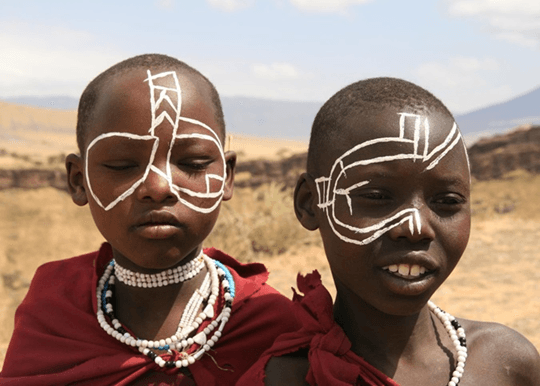
There are agricultural societies with age set systems, there are also many pastoral societies with age set organization, for example the Nyakyusa and Kikuyu who are predominantly agricultural have age-set organization, on the other hand the Maasai who are predominantly pastoral also have an elaborated age set system.
There are reasons which can explain the above similarities; the Nyakyusa were faced with rapid population growth before the 19th century, but at the same time they had an ample supply of fertile arable land, in order to beat overpopulation, they developed a system of social organization based on age-set system, under this system each generation had to clear their own land and set up their own villages. The OBUSOKA ceremony marked the passing –in of the new leadership and the passing-out of the old leadership
The pastoral Maasai of Kenya and Tanzania provided yet another example, it shows how the nature of material production and the level of productive forces determined the form of social organization, pastoralism like crop-husbandry is a permanent activity, livestock demands continuous care and attention, it demands great efforts in looking for grazing land and water holes. Above all livestock keeping required an efficient system of mobilizing the young men for defense and offence.
Such combined efforts could not be limited to family or clan organization, they therefore organized themselves in age-set groups where the division of labor is based on age and sex,
DIVISION OF LABOR AMONG THE MAASAI
Among the Maasai age-set organized basing on the following age line:
- 0-8 years old, was the group of children, these were not direct involve in production.
- 8-18 years old, was the group of young boys, they were actively involved in grazing and milking cattle they carried out these activities together with women,
- Morans, their main task was societal protection, their responsibilities and duties were;
- Protecting their societies as trained soldiers
- Protecting their livestock against wild animals and thieves.
- Increasing the size of cattle or herds via frequent warfare and bring home all captured cattle,
- Travelling with animals and searching pastures and water especially during the periods of grass scarcity and drought
A military leader was known as OLAIGUANI led the warriors after becoming senior warriors; they went through the EUNOTO ceremony and become junior elders.
- The last group consisted of elders who were divide into three groups namely, the junior elders, the elders and the senior elders, the elders controlled livestock and other properties in the community on behalf of the community, the Laibons who were amongst the most senior elders had special respect as political and religious leaders. All the elders were not directly involved in production however they were treated as retired producers.
NTEMI SYSTEM
Ntemi came from the word “kutema” which means “to cut” Ntemiship system had emerged by the 12th century in Western and Central Tanganyika in areas of Sukuma, Nyamwezi, Kimbu, and Gogo where there was abundant land and pastures, by the 19th century there were more than 300 Ntemiship in areas of Sukuma, Nyamwezi, Gogo and Kimbu, among the Sukuma the ruler in Ntemiship organization was called MTEMI, He became Mtemi by either because he was a founder of a locality or he was chosen by the council of elders. Choosing a person to become Mtemi depended on the following qualities
- He was to be a man of leadership
- He was to be a distinguished personality in warfare
- He was to be wise
- He was to be an innovator, a man of initiative, encouraging new ideas and technology
RESPONSIBILITIES OF THE MTEMI
- Enforcing proper use of resources such as land, water, forest and properties.
- To oversee the community for reserve,
- He had authority in political and judicial matters,
- Providing overall guidance in the community
- He settled dispute and judge cases of murder, witchcraft, and treason.
- He opened planting season,
- He could declare war or make peace with the advice of council of elders.
The Mtemi expropriate wealth through collection of taxes or tributes from their subjects, this was in form of grains or livestock, Hunters paid parts of what they hunted such as meat, ivory, and animal skin, Craftsmen paid parts of their wares such as hoes, spears and knives, from trade caravans the rulers collected duty in form of cloth, cowries, beads, chinaware, salt and gold, above all the rulers themselves participated in local and regional trade.
STATE ORGANIZATION
A state is a political unit with a centralized government and power to collect tributes, make laws and also reinforce them effectively. Or,
Is the group of people who are living together with a common identity such as leadership, language and culture.
By about the 15thcentury village communities had emerged in various parts of East Africa, clan organization, chieftainship and kingdoms developed centralized political organization known as States.
In Africa forms of state organizations varied from place to place, in the interlacustrine areas this process finally led to the establishment of kingdoms under MWAMI in Rwanda, Burundi and Buha, in kagera region and Ankole the supreme political authority was the OMUKAMA who was known as KABAKA in Buganda, throughout much of central Tanzania the village ruler became known as the MTEMI, in South-Central Tanzania the Hehe, Bena, and Sangu were ruled by the MTWA by about the same time, a similar process was taking place among the people of the Pangani Valley, the Chaga, Pare, and Sambaa as well as the Nyakyusa and Kamba in Kenya.
It must be noted that the basis of this form of organization was material production. The form of state that emerged was determined by the nature of struggles taking place within each particular area.
THE DIVISION OF PRE-COLONIAL AFRICAN STATES/SOCIETIES
Pre-colonial African societies had the following division
- Centralized societies (kingdoms and empires)
- Decentralized societies (segmentary)
CENTRALIZED SOCIETIES
These were societies that were ruled by chiefs or kings, examples of such societies in pre-colonial Africa included the Toro, Buganda, and Bunyoro, of East Africa. Ethiopia, the Asante, Dahomey, Benin, Oyo, Sokoto, and Tokoro, of West Africa. The Ndebere, Rozi, and Gaza of Central Africa. The Zulu of South Africa. Mali, Ghana, and Songhai in Western Sudan.
CHARACTERISTICS OF CENTRALIZED STATES
- They extended over large areas.
- The throne was hereditary in nature.
- The king controlled the wealth of the kingdom
- The citizen and the traders were obliged to pay tribute to the king as all wealth of the state belonged to him
- The king or emperor was considered as symbol of unity
- Expansionist in nature
- The kings and their officials exercised authoritarian rule towards their subjects.
- Centralization of power in the hands of the king ensured national unity,
- The king was vested with judicial authority,
DE-CENTRALIZED SOCITIES.
These were also known as non-centralized societies; these societies were made up of separate political units which governed themselves independently, there was no single ruler of the group instead there was a council of elders. In decentralized societies basic unit of political organization was the clan, various clans constituted a tribe.
CHARACTERISTICS OF DECENTRALIZED SOCIETIES.
- There was no outstanding army; the defense of the clan was carried out by all able-bodied men.
- It was governed by clan council and the general assembly
- It had no central control of the economy
- Existence of equality among the members
- Existence of democracy
- Leadership was not hereditary but leaders came into power through election.
- The clan elders worked to solve internal conflict but if they became difficult they were transferred to the general assembly
- Intermarriage occurred but those of the same clan were prevented to marry each other, the emphasize was placed upon those of different clan aiming to prevent he inheritance of diseases.
FACTORS FOR THE RISE OF PRE-COLONIAL AFRICAN STATES.
EAST AFRICAN STATES
- THE BUGANDA KINGDOM
The kingdom of Buganda was geographically located on the shores of Lake Victoria (in the interacustrine region) it grew to its apex by mid of the 19th century. This was highly centralized monarchy and was one of the daughter states that came into existence after the collapse of vastly expanded Bunyoro kitara kingdom. There existed two traditions that seek to explain the origin of Buganda kingdom,
The Bunyoro tradition which portrays and believes that the founder of Buganda kingdom was Kato Kimera the brother of Isingoma Lukindi Mpunga the author of Luo Babito dynasty.
The Buganda tradition on the other hand argues that Kintu was the founder of Buganda kingdom, today between thirteen and fourteen clans of Buganda accept this second tradition.
FACTORS FOR THE RISE OF BUGANDA KINGDOM
- Geographical factor; Buganda had abundant rainfall and the suitability of her soil for productive cultivation, this ensured adequate supply of food and surplus to be used in trading activity.
- Good military; Buganda was able to acquire guns and the army was well disciplined, the army launched successful attacks against her neighbors, for example Bunyoro and Toro
- Good leadership; Kabaka Mutesa of Buganda was good, charismatic, ambitious and fore sighted leader who was well committed to develop his kingdom. Also Kabaka was believed to have divine power.
- Availability of iron technology; iron technology was a major raw material in making of tools and weapons.
- Rapid population; this was due to high production of food, the population ensured availability of enough man power.
- The decline of Bunyoro-kitara gave room to Buganda to rise quickly and undisturbed.
- Polygamism; the Buganda kingdom had approximately 52 clans, Kabaka married from almost very important clan. Hence intermarriage was a political weapon as it brought all clans together equality among clans and ensured loyalty to the kabaka’s dictatorship.
- Trade; the Buganda developed trading contacts with her neighbors that were under the governance of Kabaka, also the long distance traders acted as a catalyst for the growth of Buganda.
- Agriculture; good climatic condition and fertile soils favored agriculture, the main crops included yams and banana, this crops sometimes used as trade items also as food.
- Conquest; the Buganda kingdom conquered the weaker Bunyoro kingdom.
- Religious practices; Kabaka was a political leader who preceeded over religious functions and was regarded by the Ganda as Semi-divine person LUBAALE (supreme god) possessed various gods, they included Musoke who was in charge or rain, Mukasa who was in charge of lakes and Walumbe who was in charge of death.
NYAMWEZI KINGDOM
Factors for the Rise of Nyamwezi Kingdom
- Ngoni invasion; the Ngoni invasion in Western Tanganyika made the Nyamwezi people to unite in order to resist the Ngoni attacks.
- Good standing army; the “rugaruga” a class of mercenaries had emerged in central Tanganyika in the middle of the 19th century due to the Ngoni raids and slave trade intensification. The group was paid to fight against the enemies. In Nyamwezi, the leaders like Mirambo used rugaruga to build the kingdom.
- The expansion of local trade into regional trade; saw the emergence of wealthy tra
- ders like Mirambo, who made effective use of the rugaruga.
- The use of guns and gun-powder by Mirambo’s soldiers in making the weaker watemi (emperors) submissive to his rule.
- Agriculture; the Ntemi organized and motivated people to involve themselves in crop production in order to avoid famine, they cultivated mainly grains, the Ntemi controlled the major means of production for the benefit of all clans. Also Nyamwezi were engaged in pastoralism and kept animals including cattle, sheep, and goats.
WESTERN SUDANIC STATES
Ghana Empire
In the 5th century A.D Tunka Manin ruled a rich kingdom of the West African savannah, the original state of Ghana occupied an advantageous geographical position, it could play a middlemen’s role in salt, gold and slave trade, in spite of having its own reserve of gold, gold from Wangara in the forest belt was exchanged for salt from Taghaza in the Sahara, Ghana was also controlled trade with North Africa and Egypt. Much of Ghana’s trade was strictly under state control the king was the sole monopolist of trade in gold nuggets, the other gold traders dealt in gold dust, both the profit obtained from trade and tribute were used by the king to strengthen his position, to expand the empire, expand the army and so on.
Increasingly therefore a large of commercial class became discontented with the state monopoly of trade, there was also over growing dissatisfaction over taxation in the empire, manifestation of such discontent started around the middle of the eleventh century A.D.
Different vassals states refused to pay tribute while others declared themselves independent of the king of Ghana.
The second cause of the decline of Ghana were the constant attacks from the Almolavids from the North these attacks were conducted under the banner of Jihad (Islamic holy war) but actually the attacks were aimed at retaking Audoghast the centre of salt trade taken from the Berbers by Ghana in 992AD.
MALI EMPIRE
The powerful kingdom of Mali was centered in the upper Niger valley under the leadership of Sundiata who united the kingdom about 1230, Sundiata developed Mali from The small kingdom known as Kangaba. In 1312 after the death of Sundiata in 1255, Mansa Musa became ruler of Mali, by this time the traders from North Africa had brought new religion (Islam) to West Africa. Mansa Musa expanded his kingdom and made Islam the official religion, Mansa Musa’s trip to the holy city of Mecca created new ties between Mali and the Muslim people of North Africa and South West Asia.
During his 25 years rule Mansa Musa used his new ties to the Muslim people to make Mali a center of learning, scholars came to teach religion, mathematics, medicine and law in the late 1300s, however about 50 years after Mansa Musa died and fighting broke out within the kingdom, several provinces broke away and become independent, one of these former provinces became an empire in its own right, it was called Songhai.
SONGHAI EMPIRE
Songhai become the leading kingdom of west African savannah during the 1400s like the rulers of Ghana and Mali Songhai’s rulers controlled trade routes and the sources of salt and gold, Songhai’s wealth and power grew when it conquered the rich trading city of Timbuktu in 1468.
In less than 100 years however the kingdom began to lose power, in the late 1500s the people of Songhai began fighting among them, the kingdom became weaker and it easily fell to the guns and cannons of an army from Morocco in North Africa, the era of the rich and powerful trading Empires of west Africa was at an end.
GENERAL FACTORS FOR THE RISE OF WESTERN SUDANIC STATES.
- Good leadership like Mansa Musa of Mali, Tunka Manin of Ghana, and Askia Mohamed of Songhai.
- Good standing army
- Conquest
- Trade i.e. Trans Saharan trade
- Good geographical location e.g. in Niger valley
- Agriculture
- Population.
GENERAL FACTORS FOR THE DECLINE OF WESTERN SUDANIC STATES
- Vastness of the empire
- Conquest
- Loss of control over trans Saharan trade
- Death of visionary leaders
Trade: Refers to the exchange of goods or services for money or other goods or it’s the buying and selling of goods.
Trade developed when people produced goods over and above their day to day needs, only surplus products were traded, important commodities (tradable) included iron tools, food items and crafts.
METHODS OF TRADE
Batter trade, is the trade where by goods or service are exchanged for other goods or services, for example, the exchange of cattle for iron tools between the Maasai and Gweno was barter trade in Northern Tanzania the Kissii traded their ports for food from the pare.
The currency method of trade is where by money is used. Money is something that is accepted as a measure of value by the people taking part in trade
TYPES OF TRADE IN RE COLONIAL AFRICAN SOCIETIES
Local trade-was the trade which involved people within the same geographical location or within the same ethnic group
Long distance trade, is the trade between people from different location or different ethnic group for example Trans Saharan trade
THE LONG DISTANCE TRADE IN EAST AFRICA
The term long distance trade (LDT) Refers to the pre-colonial trade caravans which moved over long distance, in this case of East Africa the long distance trade was seasonal. It was mainly during dry seasons and during the rainy seasons, when most Bantu tribes who actively participate in trade settled down for agriculture.
THE PARTICIPANNTS IN THE TRADE.
The Kamba, Baganda, kikuyu, and Banyoro carried trade activities along the northern route. On the central route the Nyamwezi were out spoken providers of caravan porters, the leader of this caravan was Chief Mirambo.
On the southern route The Yao became the first prominent traders, chief Mponda and Motaka were the one who mobilized them.
|
ITEMS OF TRADE
Gums, gun powder, cloth, beads and hard ware from the coastal Arabs and Swahili trader
Ivory, Slaves, minerals (copper), animal skin and tortoise shells from the tribes of the interior.
FACTORS FOR THE RISE OF THE TRADE
The commercial development occurred in East and Central Africa between 1855-1914 and was marked by the exchange in trade items, thanks to the relationship with Asia, Arabia and Europe, trade grew up voluminously between 1855-1914 for the demands exceeded the supply, thanks to the death of local products at the coast. The Swahili and Arab traders stationed at Zanzibar migrated to the interior for they were attracted by the richness of East and Central Africa. The trade developed due to the following factors;
- The growth of iron technology, in some tribes of the interior of East Africa spurred the expansion of the long distance trade, like the Bunyoro and Nyamwezi were involved in blacksmithing, they made different iron equipment that included hoes, axes, pangas, and also produced salt. Tribes that were formally engaged in forming routes joined with tribes like the Bunyoro, the Nyamwezi, and the Kikuyu in the long distance trade because in doing so they obtained needed goods and because it was very profitable,
- The expansion of the industrial revolution from England to other European nations partly accelerated the development of long distance trade, local products like ivory, minerals turned out to be lucrative to the European during the second half of the nineteenth century, high demands of local products pressurized the traders to move deep in the interior of east Africa to obtain cheaply ivory and minerals.
- The shift of Sultan Seyyid Said said from Muscat Oman to Zanzibar in 1840, he and other Arabs traders created clove plantations in order to over satisfy the over expanding needs in the European market, in order to boost production, he wanted cheap labor which could be offered by slaves who could be obtained from the interior parts of Africa.
- Introduction and availability of fire arms also was instrumental in contributing to the development of long distance trade, the presence of fire arm made it easier for Chokwe, Bisa, and Nyamwezi people to transform their traditional skills into modern ones to attract the available market and also aided those who were involved in slave trade to easily acquire captives.
- The division of labor and specialization among the Chakwe and seasonal pattern of the land use among the Nyamwezi of West Central Tanganyika, after preparing the land for planting men would leave the work of harvesting to women, men would travel far of hunting ivory and transacting trade for several months without checking back on their homes.
- High demands of imported European and Asian products for example clothes, and fire arms.
REASONS FOR THE DECLINE OF LONG DISTANCE TRADE
- Inter-tribal wars, by 1880 competition for long distance trade items had come to its climax with many new East African societies interested in joining the long distance trade business for example in Kenya the Kamba fought with the Nandi in competition for rare products such as ivory which Arabs wanted most in Kenya.
- Presence of insecurity created by bandits almost in all trade routes, they had a problem of way layers for example the central route that was occupied by the Nyamwezi had a group of bandits known as Rugaruga and Mvui who molested traders from the central routes where as the hostile Zaramo, Ukimbu, Porkorno, molested traders from Kenya,
- The depletion of elephant population due to over hunting indeed affected ivory products, also contributed to the decline of long distance trade by 1890s the elephants had been forced to migrate to distance areas also they were killed in large number especially after the introduction of guns.
- The death of outstanding long distance traders; continuous assassination of African chiefs by Swahili and Arabs traders in search of trade items contributed to the decline of long distance trade, Mirambbo, Nyungu ya mawe, and Kabaka mutesa I of Buganda all died in the same year of 1884 whose active participation and organizational abilities had led to success of long distance trade, unfortunately their successors lacked such abilities.
- Introduction of legitimate trade by European traders during the period of scramble for and partition of Africa in 19th century led to the decline of long distance trade.
THE IMPACTS OF THE LONG DISTANCE TRADE
- The integration of African economy into the world capitalist economy, Africa was producing many raw materials that were absorbed by the outside world and in return was receiving goods produced by the outside world.
- There was introduction and spread of new cash crops from the coast to the interior that helped people to get both food and cash crops, those included maize, rice, pineapple and sugar,
- The caravan routes latter became useful for inland penetration by European explorers, missionaries and traders. In their enterprises used the routes that had been utilized by traders and without them the European colonial agents would have encountered many setbacks.
- It created monetary system that took the place of barter system of trade, the new form of trade was introduced including cowrie shells, coinage, and paper money.
- Development of towns in East Africa, for example Ujiji, Tabora, Bagamoyo, Tanga, and Kiwa,
- Increased intermarriage and social interaction gave rise to Afro-Asiatic, Afro-Arabic, and Afro-European culture in Africa.
- Long distance trade helped to improve relationship between some African societies which had before, for example the Kamba and the Nandi tribes in Kenya had to ignore their traditional differences in order to trade freely as friends.
- The trade involved itself in selling of human being who greatly depopulated most of East and Central African societies.
- It led to the state formation in East Africa, this came out as the result of individuals who acquired wealth and other opportunities from long distance trade that helped them to build large political kingdoms for example Nyungu Ya Mawe, Mutesa I, Mirambo, were able to build their kingdoms as a results of opportunities from the long distance trade.
- The long distance trade stimulated the production of local food stuffs required to meet food demands of caravan traders who did not carry food supplies along the way.
THE TRANS–SAHARA TRADE
This was the exchange of goods between Western Sudan and North Africa passing through the Saharan desert. The term “Trans” means across. While existing from prehistoric times, the peak of trade extended from the 8th century until the early 17th century.
The Northern people who took their goods across Saharan desert to Western Sudan were the Berbers and Touaregs, also from the Northern Sudan some goods came from Europe and Asia consisted of cotton and silk clothes, swords, guns, metal pans and horses.
Commodities that originated from Western Sudan included slaves, ostrich feathers, kola nuts, gold, salt, ivory and food stuffs, Camel were used as the primary means of transport, the Berbers passed through the Saharan desert and collected commodities from Western Sudan, the medium of interchange of goods and services was barter system later cowrie shells from Maldives were used as means of exchange, this replaced barter system.
The trade involved different zones which were ranging from Forest i.e. involving the forest states like Benin, Oyo, Kanem, Bornu, and many more. The savannah belt which involved the Western Sudanic states (Ghana, Mali, and Songhai) the Sahara Desert and the North Africa, the Mediterranean world and Europe.