




JOIN US WHATSAPP CLICK HERE
JOIN US TELEGRAM CLICK HERE
TOPIC
1: STRUCTURE OF
THE EARTH
The Meaning of Earth
– Earth is the planet on which we live, the world
– Earth is the planet third in order from the sun, having an equatorial diameter of 7926 miles (12,755 km) and a polar diameter of 7900 miles (12,714 km), a mean distance from the sun of 92.9 million miles (149.6 million km), and a period of revolution of 365.26 days, and having one satellite.
– The earth is the land surface on which we live and move about.
 |
| Earth |
Structure of Earth
– The shape of the
earth is an oblate spheroid, because it is slightly flattened at
the poles and bulging at the equator.
earth is an oblate spheroid, because it is slightly flattened at
the poles and bulging at the equator.
– The earth is a system which is
composed of outer and inner zones. The outer zones of the earth include the atmosphere, the hydrosphere and the
barysphere. The inner zones of the earth include the crust, mantle and the core.
 |
| The Structure of the Earth showing Inner Zone and Outer Zone |
CONCENTRIC ZONE OF THE EARTH
The inner zones of the earth constitute the internal
structure of the earth. The inner zone / internal structure of the earth
consists of three zones or layers which are:
structure of the earth. The inner zone / internal structure of the earth
consists of three zones or layers which are:
1. Crust
2. Mantle
3. Core
The boundaries between these layers were discovered by seismographs which showed the way vibrations bounced off the layers during earthquakes. Between the Earth’s crust and the mantle is a boundary called the moho. It was the first discovery of a major change in the Earth’s structure as one goes deeper.
The boundaries between these layers were discovered by seismographs which showed the way vibrations bounced off the layers during earthquakes. Between the Earth’s crust and the mantle is a boundary called the moho. It was the first discovery of a major change in the Earth’s structure as one goes deeper.
1. CRUST
Is the outermost and thinnest zone of the earth which
found between 8 – 50 km or 5 – 30 miles. It is known as Lithospere, It is
largely composed of igneous rocks. Other types of rocks also exist as a result
of changes on the earth’s surface. The rocks are crystalline, hard and brittle.
Bacause of being brittle they tend to break when subjected to stress or forces
especially the compressional forces. The crust also consist of two layers are
sial and sima layers.
a) Sial
Is the outer layer of the crust which rich in silica and
Aluminium minerals. The sial for the basis of the continent. The presence of
silica and aluminium minerals collectively form SIAL layer.
Aluminium minerals. The sial for the basis of the continent. The presence of
silica and aluminium minerals collectively form SIAL layer.
a) Sima
Is the layer which found beneath the sial. It is the
inner layer of the crust which separated from sial layer by the zone called
Conrad discontinuity line. The sima layer is composed by silica and magnesium. It
forms the basis of ocean floor.
inner layer of the crust which separated from sial layer by the zone called
Conrad discontinuity line. The sima layer is composed by silica and magnesium. It
forms the basis of ocean floor.
Note: Sial and sima layer together forms the crust.
2. MANTLE
Mesosphere or mantle which found between the crust and
core. It lies beneath the crust. It separated from the crust by the zone of
separation called Mohorovic discontinuity or moho. It extends downward to about
2900 km (1800 miles) where the temperatures may reach about 50000c. It
consist of pale green minerals called Olivine (Ferromagnesium silicate) in form
of ultra basic rock.It consists of lower and upper mantle. The upper mantle is
rigid and crust to form a large layer called lithosphere.
The lower mantle is less rigid and forms the moltern
layer within the earth’s interior called asthenosphere.
Asthenosphere is the molten layer layer which responsible for the balancing movement
of the earth’s material called isostatic readjustment. Asthenosphere has been
investigated is found between 100 to 200 km below the upper surface.
layer within the earth’s interior called asthenosphere.
Asthenosphere is the molten layer layer which responsible for the balancing movement
of the earth’s material called isostatic readjustment. Asthenosphere has been
investigated is found between 100 to 200 km below the upper surface.
3. CORE
The core is the innermost zone of the internal structure
of the earth. It is also called barysphere or centrosphere. It has diameter of
about 6900 km (4300 miles) density of about. The core is also classified into
two parts i.e. the outer and inner core. It separated from the mantle by zone
of separation called Gutenberg discontinuity.
of the earth. It is also called barysphere or centrosphere. It has diameter of
about 6900 km (4300 miles) density of about. The core is also classified into
two parts i.e. the outer and inner core. It separated from the mantle by zone
of separation called Gutenberg discontinuity.
1. The Outer Core
It is liquid in nature due to high temperature of up to
37000c, and consist of nickel and iron (NIFE) . It is estimated to
be 2100 km with density of about 10.5 gms/cc.
37000c, and consist of nickel and iron (NIFE) . It is estimated to
be 2100 km with density of about 10.5 gms/cc.
2. The Inner Core is thought to be solid in nature
because of high pressure exerted from different parts toward the center – It
composed mainly by iron. It has diameter of about 2600 – 2700km. (1600 – 1700
miles)
because of high pressure exerted from different parts toward the center – It
composed mainly by iron. It has diameter of about 2600 – 2700km. (1600 – 1700
miles)

EXTERNAL STRUCTURE OF THE EARTH
External structure of the earth consists of four main layers’.
These are Atmosphere, Hydrosphere, Lithosphere / Land mass Biosphere, Biosphere
These are Atmosphere, Hydrosphere, Lithosphere / Land mass Biosphere, Biosphere
1. THE ATMOSPHERE
Is the thin layer of gases held on the earth by
gravitation’ attraction. It composed by abiotic (nonliving matter) and biotic
living organism. Non-living matter found in the atmosphere includes mixture of
gases, water vapor and dust particles. The living organism include the smallest
or microscopic organisms like bacteria
gravitation’ attraction. It composed by abiotic (nonliving matter) and biotic
living organism. Non-living matter found in the atmosphere includes mixture of
gases, water vapor and dust particles. The living organism include the smallest
or microscopic organisms like bacteria
COMPOSITION OF ATMOSPHERE
Atmosphere is the outer zone or external structure of the
earth composed by Abiotic and Biotic components.
earth composed by Abiotic and Biotic components.
1. Abiotic Components of Atmosphere. The abiotic
components of the atmosphere include the following. Mixture of various gases
These include Nitrogen (78%), oxygen (21%), argon (0.009%) and carbon dioxide
(0.03%). Other gases include neon, helium, Krypton, xenon and other which are present
in minite (small proportion) percentage. Water vapor Is the colorless and
odorless (smell less) gas in the form of water which makes up a perfect mixture
with other gases.
The degree to which water vapor is present in the atmosphere
is called humidity. Humidity is very important to weather as condensed to form
clouds and fog. Excess water vapor brings about precipitation in form of rain,
hail, snow and sleet. Water vapor is capable of absorbing heat which penetrates
into the atmosphere in the form of radiant energy from the sun to the earth. It
is also act as a blanket which prevents the rapid escape of heat from the
earth’s surface and therefore maintain heat budget. Dust particles.
The Dust Particles may Exposed to the Atmosphere
Naturally or Artificially
Naturally or Artificially
a) Natural dust particles are those caused by natural
phenomena like winds and volcanic eruptions.
phenomena like winds and volcanic eruptions.
b) Artificial dust particles are those derived from
industrial pollutions such as soot and ashes. It includes the particles caused
by other man’s activities like construction, mining and farming activities.
industrial pollutions such as soot and ashes. It includes the particles caused
by other man’s activities like construction, mining and farming activities.
The function of dust particles serve as a nuclear or
center around which water vapor
center around which water vapor
condenses to produce clouds.
2. Biota components of atmosphere includes
bacteria etc
bacteria etc
STRUCTURE OF ATMOSPHERE
According to the temperature changes, atmosphere divided
into two zones. These are Homosphere and Heterosphere
into two zones. These are Homosphere and Heterosphere
HOMOSPHERE
Homosphere is the layer which found between 0 – 80km
above the sea level. This is the lowest part of the atmosphere which composed
of uniform composition gas of uniform composition of gases and temperature. Homosphere
consists of three layers, namely:
above the sea level. This is the lowest part of the atmosphere which composed
of uniform composition gas of uniform composition of gases and temperature. Homosphere
consists of three layers, namely:
i) Troposphere
This layer extends by 0 – 15km above the sea level. Troposphere
is the first layer of homosphere located nearest to the earth. It contains
water vapor, gases and dust particles. It is the layer of atmosphere which
support life on the earth due to the presence of plenty oxygen gas. All
processes of rainfall formation take place in this layer and the temperature
decreases as the altitude increases at the rate of per every 100 meters or per
every 1000 meters.
Note: This situation where by temperature decreases as
altitude increases is called lapse rate and because it occur near to the ground
is called environmental Lapse rate. The upper limit of Troposphere which
separates it to the next later is called Tropopause. Tropopause makes the upper
limit of troposphere to the next layer called stratosphere.
altitude increases is called lapse rate and because it occur near to the ground
is called environmental Lapse rate. The upper limit of Troposphere which
separates it to the next later is called Tropopause. Tropopause makes the upper
limit of troposphere to the next layer called stratosphere.
ii) Stratosphere
Stratosphere exists between 15 – 48 km above the sea
level. This is the second layer of homosphere which lies above the tropopause. It
is also composed of water vapor, dust particles and various gases. It is the
layer of atmosphere which characterized by high concentration of Ozonic gases.
This gases form Ozone layer which found particularly at 20 –35 km in the
stratosphere.
The Ozonosphere or ozone layer is the layer which form a
shield or cover that prevent the earth’s surface from destroying by the sun
rays. It prevents the direct incoming of harmful rays from the sun to fall direct
on the earth’s surface. The temperature remains unchanged about between 20 – 35
km from the earth’s surface. Then temperature increases with height to about at
the upper limit of stratosphere called stratopause. The increase in temperature
with height is referred to as temperature invasion.
iii) Mesosphere
This layer extends between 48-80 kilometers above the sea
level. Mesosphere is the third part of the homosphere where temperature decreases
as the altitude increases. It separated from the stratosphere by the zone of separation
called stratopause. The upper limit of mesosphere is called mesopause. Mesopause
record minimum temperature of this zone that may fall to making this zone to be
coldest. It is at this zone where strong upper air streams of wind like jet
streams are experienced.
HETEROSPHERE
Is the second layer of atmosphere which extends from 80km
towards the interplanetary space. Heterosphere divided into two layers which
include Thermosphere and Exosphere
towards the interplanetary space. Heterosphere divided into two layers which
include Thermosphere and Exosphere
i) Thermosphere
Is the lower part of heterosphere where temperature
increases as the altitude increases from i.e. temperature invasion. This is
because there is no water vapor or dust particle in this zoneIonosphere
consists of some ions which influence radio waves. This is because, ionosphere
is electrically charged with free electrons that allow the passage of radio
waves, television waves and telephone or mobile phone waves
ii) Exosphere
Is the part of heterosphere which found above the
thermosphere. It has high temperature through it has little significance as it
has not been greatly researched.
thermosphere. It has high temperature through it has little significance as it
has not been greatly researched.
Note: Within the heterosphere, there is also a scientific
significant layer called ionosphere. Ionosphere consists of some ions which
influence radio waves. This is because, ionosphere is electrically charged with
free electrons that allow the passage of radio waves, television waves and
telephone or mobile phone waves.
significant layer called ionosphere. Ionosphere consists of some ions which
influence radio waves. This is because, ionosphere is electrically charged with
free electrons that allow the passage of radio waves, television waves and
telephone or mobile phone waves.

Function of Atmosphere
1. Insulation Atmosphere is an insulator, it acts as a
shield or blanket and therefore regulates temperature during the night and
during the winter.
shield or blanket and therefore regulates temperature during the night and
during the winter.
2. Filtration. The atmosphere is the filter, it filters
solar insulation and percent ultra violet rays of certain length due to the
presence of ozone layer in the stratosphere.
solar insulation and percent ultra violet rays of certain length due to the
presence of ozone layer in the stratosphere.
3. Scientific function. Atmosphere is the scientific
field, it is the field through which the scientific experiments and observation
carried out. Example ionosphere layer of atmosphere reflects some electromagnetic
waves and ration signals back to the earth.
field, it is the field through which the scientific experiments and observation
carried out. Example ionosphere layer of atmosphere reflects some electromagnetic
waves and ration signals back to the earth.
4. It supports much on hydrological cycle. The surface
water, evaporation, condensation and precipitation formation take place in the
atmosphere.
water, evaporation, condensation and precipitation formation take place in the
atmosphere.
5. It support life some gases particularly oxygen is important
for living organisms. Air has weight which contributes to the occurrence of
atmospheric pressure variations without which breathing would be impossible. Wind
movement and direction that balances temperature, humidity and precipitation
also result from pressure variations.
for living organisms. Air has weight which contributes to the occurrence of
atmospheric pressure variations without which breathing would be impossible. Wind
movement and direction that balances temperature, humidity and precipitation
also result from pressure variations.
2. THE HYDROSPHERE
Is the layer of water bodies of the earth including all
oceans, rivers, precipitation and underground water. It is estimated that 75% of the Earth’s
surface is covered by water bodies.
oceans, rivers, precipitation and underground water. It is estimated that 75% of the Earth’s
surface is covered by water bodies.
3. THE LITHOSPHERE / LAND MASS
Is the whole solid body of the earth with various
landforms such as mountains, valleys and plateaus. The lithosphere is also known
as the crust. It includes all land masses. The major land mass is called
continent and the minor land mass is called islands.
landforms such as mountains, valleys and plateaus. The lithosphere is also known
as the crust. It includes all land masses. The major land mass is called
continent and the minor land mass is called islands.
4. THE BIOSPHERE
Biosphere is the complex zone which comprises all living
things. It includes a lower level of atmosphere and the upper level of
lithosphere and hydrosphere. Biosphere receives substantial supply of energy
from the sun which gives it condition necessary for life and does not occur in
any part of the solar system. The living organisms that inhibit biosphere
interact with each other and their environment. The sum of all these
interaction components is called the ecological system or ecosystem. Biosphere
comprises all living organism both macro and micro organisms living in water
bodies, soils and on air.
MATERIALS OF THE EARTH’S CRUST
The earth’s crust is composed of different materials
ranging from elements, minerals and rocks. These materials differ in their
physical and chemical composition.
ranging from elements, minerals and rocks. These materials differ in their
physical and chemical composition.
Elements
They refer to the smallest particles of matter which can
not be split into different forms by any means. Examples of elements are magnesium,
potassium, sodium, iron, aluminum and silicon.
not be split into different forms by any means. Examples of elements are magnesium,
potassium, sodium, iron, aluminum and silicon.
Minerals
They are naturally occurring substances which have
definite shape, colour and resistance formed due to combination of different
elements. They are formed as a result of the combination of two or more
elements. Some single elements like gold, silver and diamond may occur as
minerals. Mineral Element Quartz Silicon and oxygen Feldspar Potassium, sodium,
calcium and aluminum
ROCK OF THE EARTH’S CRUST
A rock is an aggregate of minerals in a solid state. On
the other hand the term rock can include substances like clays, shells,
sandstones and corals. Rocks which contain metallic compounds are called ores.
the other hand the term rock can include substances like clays, shells,
sandstones and corals. Rocks which contain metallic compounds are called ores.
Types of Rocks on the Earth’s Crust
Rocks of the Earth’s crust can be classified according to
their mode of formation and chemical composition. According to the mode of
formation rocks can be classified as classified as igneous, sedimentary and
metamorphic.
their mode of formation and chemical composition. According to the mode of
formation rocks can be classified as classified as igneous, sedimentary and
metamorphic.
1. IGNEOUS ROCKS
Are rocks that formed when molten rock cools and
solidifies within or outside the earth’s crust. The origin of igneous rocks is
inside the earth where they are under great pressure. Igneous rocks do not
occur in layers and they don‘t contain fossils. Igneous rocks solidify either within
the earth‘s crust and form intrusive features or outside the earth‘s surface
and form extrusive features.
Igneous rocks are formed when the molten magma is forced
out from the upper mantle to the earth‘s surface, where it cools and solidifies
due to low temperature. Crystals form on cooling and the rocks are called
crystalline rocks. There are two main types of igneous rocks:
out from the upper mantle to the earth‘s surface, where it cools and solidifies
due to low temperature. Crystals form on cooling and the rocks are called
crystalline rocks. There are two main types of igneous rocks:
1. Plutonic: these have solidified deep in the crust and
they are seen on the surface only after being exposed by prolonged erosion.
they are seen on the surface only after being exposed by prolonged erosion.
2. Volcanic: these have been poured on the earth‘s
surface where they are called lavas.
surface where they are called lavas.
Characteristics of Igneous Rocks
1. Igneous rocks reflect light.
2. They are not found in layers.
3. They do not contain fossils.
4. They are crystalline rocks.
5. They are formed through cooling and solidification of
magma.
magma.
6. They can undergo metamorphic and weathering processes.
7. They contain different minerals like iron, magnesium
etc.
etc.
In Tanzania igneous rocks are found in Dodoma, Iringa and
in the shores of Lake Victoria (Mwanza). The main examples are granite, gabbro,
basalt and diorite. Some are found in Kilimanjaro and Rungwe (Mbeya) such as
basalt, pumice, diorite, gabbro, syenite and peridotite rocks.
in the shores of Lake Victoria (Mwanza). The main examples are granite, gabbro,
basalt and diorite. Some are found in Kilimanjaro and Rungwe (Mbeya) such as
basalt, pumice, diorite, gabbro, syenite and peridotite rocks.
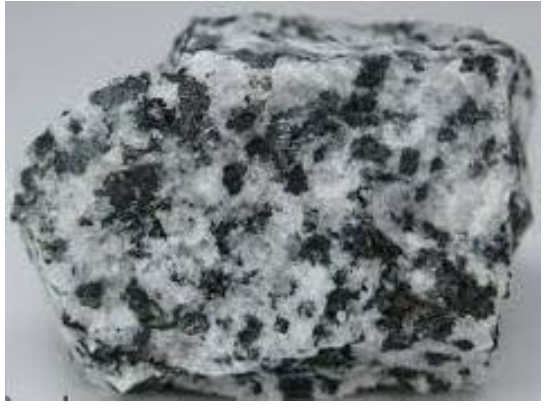
Granite
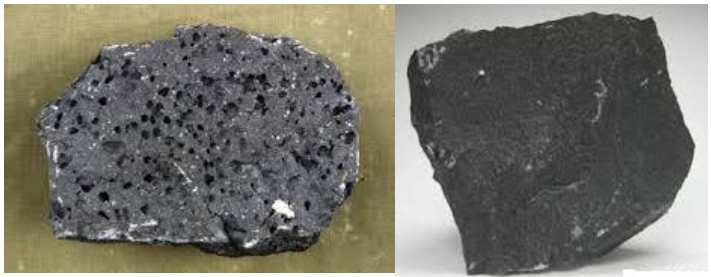
Basalt rocks
2. SEDIMENTARY ROCKS
Sedimentary rocks are rocks formed through weathering
processes when sediments are accumulated, compacted and cemented together. The
sediments are compacted by compression to form sedimentary rocks. Sedimentary rocks
are found in layers; they contain fossils and are very soft. These are
weathered particles formed through deposition and lithification processes
Characteristics of Sedimentary Rocks
1. They are formed when particles or sediments are
accumulated, compacted and cemented together.
accumulated, compacted and cemented together.
2. They contain fossils.
3. They are found in layers (strata).
4. They do not reflect light.
5. They are non-crystalline rocks.
6. They can undergo metamorphic process.
Types of Sedimentary Rocks
1. Mechanically-Formed Sedimentary Rocks. These
are formed through weathering process. When weathering agents erode and deposit
rock particles, they are accumulated, compacted and cemented together to form
sedimentary rocks. Examples of mechanically formed sedimentary rocks are clays,
gravels and alluviums (all deposited by water), moraines, boulder clay and
gravels (deposited by ice) and loess (deposited by wind); sandstones and shale.
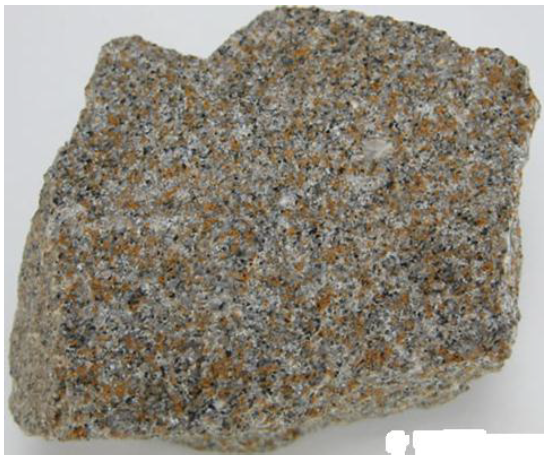
Sandstone
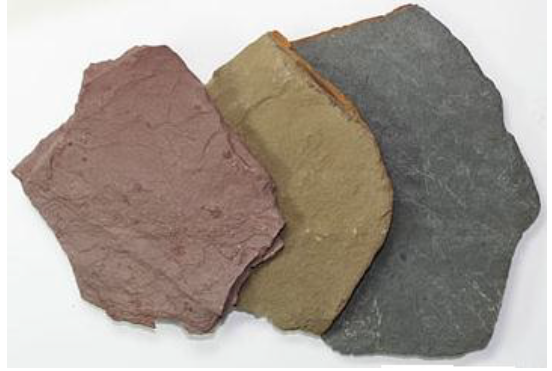
Shale: Shale occurs in a wide range of colours that include: red, brown, green, grey, and black.
2. Chemically-Formed Sedimentary Rocks. These are
formed through chemical precipitation process. They include carbonate (as it is
in stalactite and stalagmite), sulphate, chloride, etc. The main examples are
gypsum, rock salt, lignite, dolomite, flint, borax, limonite, haematite, etc.
formed through chemical precipitation process. They include carbonate (as it is
in stalactite and stalagmite), sulphate, chloride, etc. The main examples are
gypsum, rock salt, lignite, dolomite, flint, borax, limonite, haematite, etc.
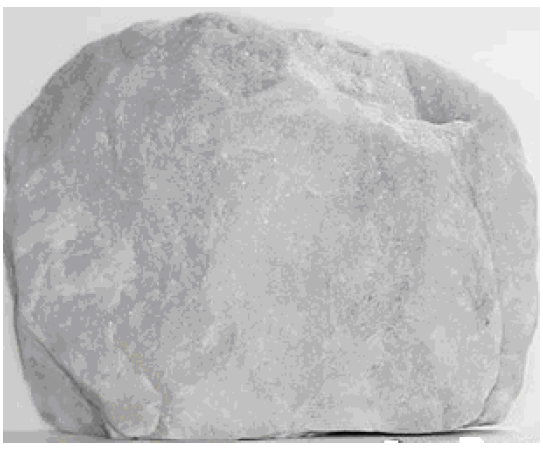
Dolomite
3. Organically-Formed Sedimentary Rocks. These are
formed through mineralization process of decaying and decomposition of dead
organisms such as animals and plants. The remains of living organisms are
accumulated, compacted and cemented together to form these sedimentary rocks. The
main examples are chalk (limestone) and coral (formed from animals), and peat,
coal and lignite (formed from plants).
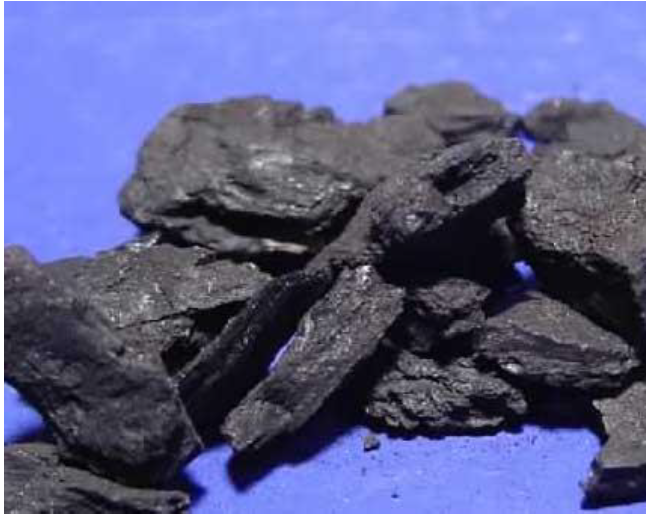
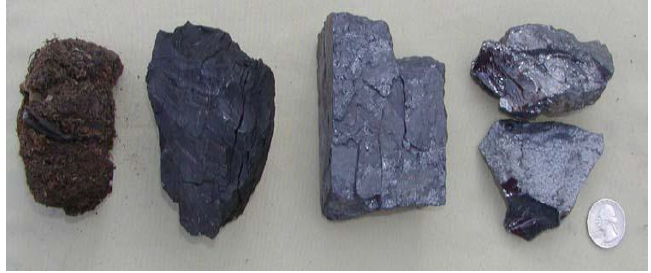
Lignite rocks
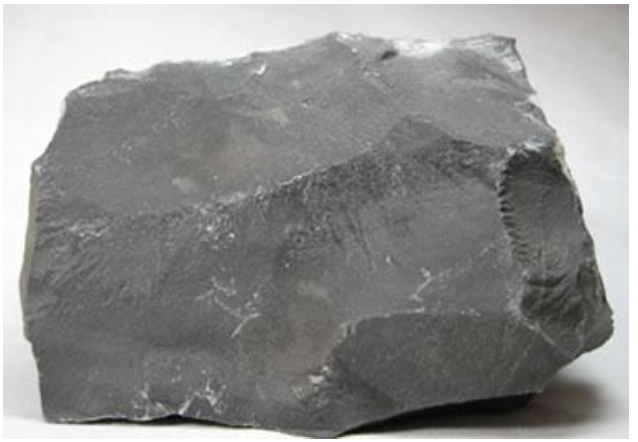
Limestone
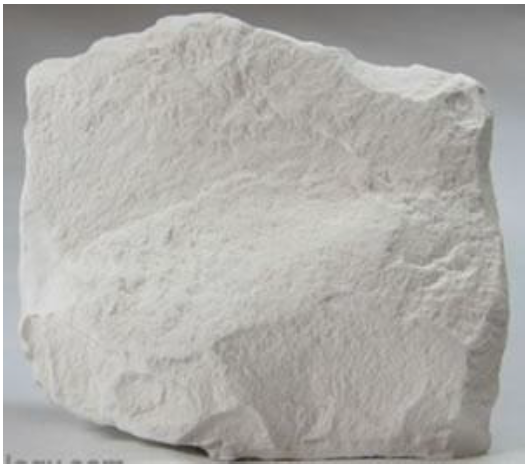
Chalk
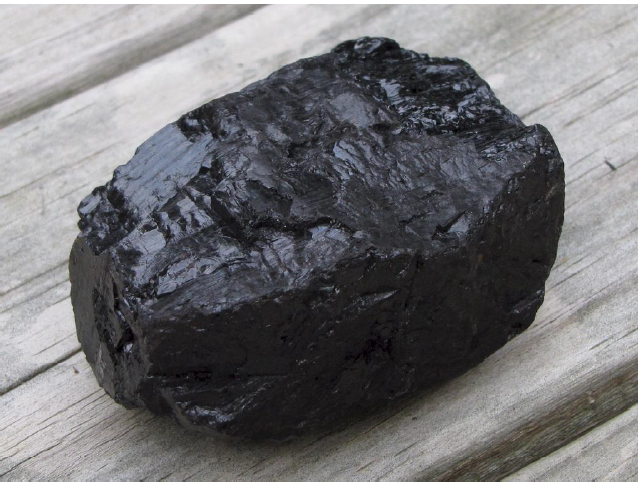
Coal
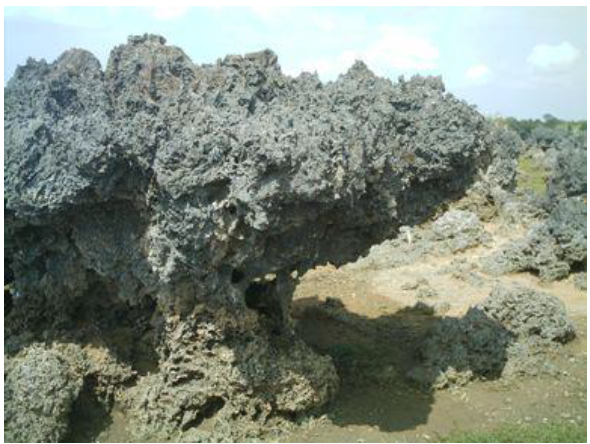
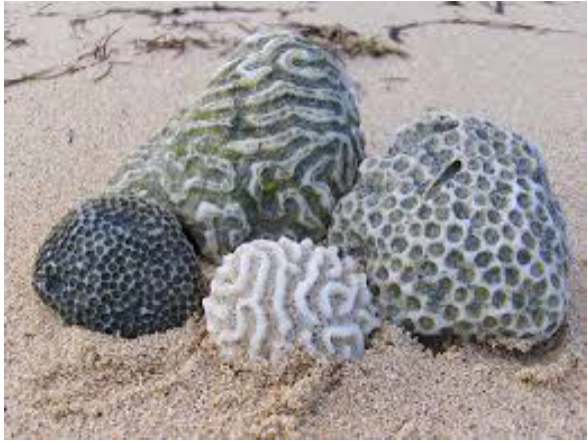
Coral rocks
3. METAMORPHIC ROCKS
These are rocks which have changed from one type of rock
to another due to the contact of heat, pressure or both. This process is
referred to as metamorphism. Any rock can be changed into a metamorphic rock.
Examples of metamorphic rocks are slate, marble and granite.
to another due to the contact of heat, pressure or both. This process is
referred to as metamorphism. Any rock can be changed into a metamorphic rock.
Examples of metamorphic rocks are slate, marble and granite.
There are Three Kinds of Metamorphism
1. Dynamic metamorphism. This is influenced by pressure
of the earth’s crust. Examples; Shale to Schist, Clay to Slate, Granite to
Gneiss
of the earth’s crust. Examples; Shale to Schist, Clay to Slate, Granite to
Gneiss
2. Thermal or contact metamorphism. This is caused by
intense heat. This can take place when the rock comes into contact with hot
molten material like magma or lava. Examples: Lime stone to Marble, Sand stone
to Quartzite
intense heat. This can take place when the rock comes into contact with hot
molten material like magma or lava. Examples: Lime stone to Marble, Sand stone
to Quartzite
3. Thermal dynamic metamorphism This is the process that
takes place as a result of a combination of heat and pressure. It is when the
existing rocks are subjected to both pressure and heat to change their shape
and appearance. Example Coal to Graphite
takes place as a result of a combination of heat and pressure. It is when the
existing rocks are subjected to both pressure and heat to change their shape
and appearance. Example Coal to Graphite
Characteristics of Metamorphic Rocks
1. They are very hard due to prolonged action of heat and
pressure.
pressure.
2. These rocks can change to another to another type of
rocks.
rocks.
3. They can undergo weathering process.
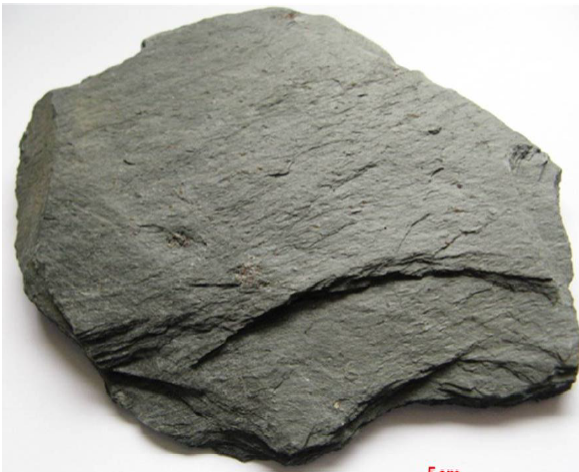
Slate
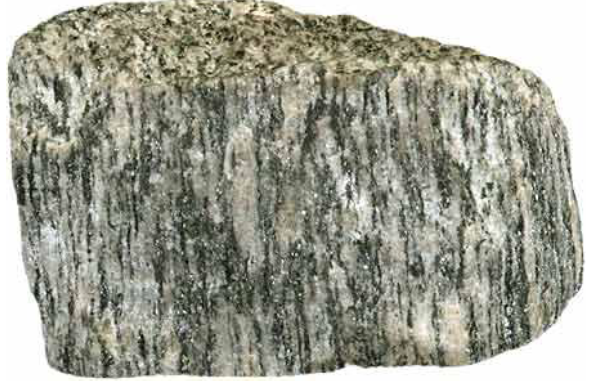
Gneiss
ROCK CYCLE
Rock cycle is a relationship in which rocks tend to
change from one type of rock to another. This is the cycle in which rocks tend
to change from one type to another. For instance igneous rocks may change to
metamorphic rocks or sedimentary rocks; sedimentary rocks to metamorphic or
igneous rocks, etc.
change from one type of rock to another. This is the cycle in which rocks tend
to change from one type to another. For instance igneous rocks may change to
metamorphic rocks or sedimentary rocks; sedimentary rocks to metamorphic or
igneous rocks, etc.
Necessary Conditions for Rock Cycle to Take Place or Process of Rock Cycle
1. First, the molten rocks erupt from the interior of the
earth and then cool and solidify to formigneous rocks.
earth and then cool and solidify to formigneous rocks.
2. Secondly, the igneous rocks are subjected to
denudation process to form sedimentary rocks.
denudation process to form sedimentary rocks.
3. Third, either igneous or sedimentary rocks undergo
metamorphism, due to prolonged heat and pressure, to form metamorphic rocks.
metamorphism, due to prolonged heat and pressure, to form metamorphic rocks.
4. Fourth, metamorphic or igneous rocks can undergo
weathering process through erosion and transportation of sediments which are
further deposited in layers in the ocean or lake floors where they are cemented
and consolidated to form sedimentary rocks and vice versa.
weathering process through erosion and transportation of sediments which are
further deposited in layers in the ocean or lake floors where they are cemented
and consolidated to form sedimentary rocks and vice versa.
5. Fifth, metamorphic or sedimentary rocks can be
subjected to heat and pressure where melting take place and later cooling, due
to low temperature, to form igneous rocks.
subjected to heat and pressure where melting take place and later cooling, due
to low temperature, to form igneous rocks.
 |
| Rock Circle |
Simplified Geological Time Scale
The geological time scale is a chart for dating the
history of the earth including rock span. It tries to explain the age of rocks
as far back as 600 million years ago.
history of the earth including rock span. It tries to explain the age of rocks
as far back as 600 million years ago.
The simplified geological time scale
| Era | Period | Years in millions before present | Major geological events in Africa | Man and animals |
| Cenozoic | Quaternary | 1 | Glaciation of East Africa mountains.Formation of river terraces and raised beaches. | Age of man |
| Tertiary | 163 | Formation of the Atlas mountains. Lava flows in Ethiopia. | Age of mammals. | |
| Mesozoic | Cretaceous | 135 | Deposition of marine sediments in the Sahara and Southern Nigeria. Formation of Enugu coalfield. | Age of reptiles |
| Jurassic | 180 | Break-up of Gondwanaland and Marine invasion of East Africa coastlands and separation of Malagasy Island from mainland. | ||
| Triassic | 230 | Drakensburg lava and formation of upper Karro beds. Volcanic activity in West Africa. | ||
| Paleozoic | Permian | 280 | Formation of lower Karro beds. Formation of rich coal deposits in Tanzania and South Africa. Ice age in central and South Africa. | Age of amphibians |
| Carboniferous | 345 | Cape fold formed. | ||
| Devonian | 405 | Marine invasion of Libya, the Sahara and Western Sudan. Continental basins formed by crustal warping | ||
| Silurian | 425 | Continental sedimentation in Zaire basin,Tanzania and South Africa, followed by intensive folding. | ||
| Ordovician | 500 | Extensive deposition of sediments.Formation of sandstones in Guinea, Mali, Volta basin and North West Ethiopia | Age of marine invertebrates | |
| Cambrian | 600 | Marine invasion of Western Sahara and Kalahari basin. | ||
| Proterozoic | Pre Cambrian or Archarean | Glaciations of Africa South of Equator.Extensive metamorphism of oldest known fossilized, unicellular algae formed in Swaziland and Mali. | Algae |
The Importance of Rocks
1. Rocks are very important in the formation of soils
which can be used for agricultural production.
which can be used for agricultural production.
2. Rocks are used for building purposes: some rocks such
as limestone, sandstone, gravels and sand are used for building houses,
construction of roads, etc.
as limestone, sandstone, gravels and sand are used for building houses,
construction of roads, etc.
3. Some rocks are used as sources of energy or fuel such
as coal and petroleum (mineral oil).
as coal and petroleum (mineral oil).
4. Limestone is widely used for cement manufacturing. In
Tanzania, cement is produced at Tanga, Mbeya and Wazo Hill.
Tanzania, cement is produced at Tanga, Mbeya and Wazo Hill.
5. Salt extraction: salt usually originate from rock
accruing strata, for instance, in Tunisia and Morocco there are large deposits
of salt.
accruing strata, for instance, in Tunisia and Morocco there are large deposits
of salt.
6. Manufacture of chemicals: some rocks contain nitrate
or phosphate, while others have potash. This kind of rocks can be used for
making dyes, fertilizers and medicines.
or phosphate, while others have potash. This kind of rocks can be used for
making dyes, fertilizers and medicines.
7. Mineral deposits: mineral ores occur in veins of some
rocks such as igneous rocks. The minerals are formed when the magma coos down.
Valuable minerals extracted from rocks include gold, lead, tin, silver,
diamond, copper, zinc, aluminium, calcium and manganese.
rocks such as igneous rocks. The minerals are formed when the magma coos down.
Valuable minerals extracted from rocks include gold, lead, tin, silver,
diamond, copper, zinc, aluminium, calcium and manganese.
8. Some rocks are so impressive such that they attract
tourist to come and view them. In so doing, the country earns a lot of foreign
exchange.
tourist to come and view them. In so doing, the country earns a lot of foreign
exchange.
9. Some rocks are used for decoration of houses as
ornaments or they are grinded to produce powder which is used for decoration.
ornaments or they are grinded to produce powder which is used for decoration.